Over the winter, working with our friend and garden designer Danilo Maffei, Pam and I settled on a preliminary plan for renovating the space in front of the house. The plan—which I’ll discuss in detail at a later date—involves removing nearly all existing vegetation and simplifying things. It also entails scaling back paved areas, introducing a new gravel patio, and relocating the steps to the kitchen.
In short, it will be a lot of work, so we’ll put it off for a while to wrap our heads and finances around it. But this work must be done at some point. Since we installed the patio garden, shed, fountain, and raised beds in back of the house, the front has suffered from neglect, which only reminds us how much work it is to maintain. The guiding principle, when we get around to it, will be greater simplicity.
A further motivation for the changes we’re contemplating is that some of the plants we installed more than fifteen years ago have become overgrown. In particular, a group of native summersweet or sweet pepperbush (Clethra alnifolia) shrubs constantly threatens to block several kitchen windows. I cut them back every fall, but never hard enough because I hate to butcher them. As a result, I’m losing the battle, and, considering they want to grow ten feet tall, the only real solution is total removal.
But, while these shrubs all have to be torn out one day, as natives they are supporting wildlife right now, and they are the only plants of their kind at Puddock Hill. Their flowers, which bloom mid-summer, are loved by hummingbirds and butterflies, including swallowtails. Other pollinators such as carpenter bees, solitary bees, bumblebees, and wasps feast on their nectar. Sparrows, towhees and juncos forage the seeds in winter. And they serve as host plants for nearly a dozen species of moths, including exclusively the specialist sweet pepperbush nola (Nola clethrae).
Where would all these animals go if I eliminated these thriving plants today?
So while we dither a bit on instituting our planned front garden renovations, I am taking the opportunity to get some Clethra established elsewhere at Puddock Hill.
It currently grows in partial sun on the east side of the house, where it is irrigated. Since it is known to like moist soil and doesn’t mind shade, I’ve decided to plant some in the wet woods, where I hope it will thrive. This spring I bought seven plants from the Delaware Center for Horticulture’s native plant sale, and by the time you read this they should be in the ground.
While we were at the plant sale (native plant sales are all the rage in these parts, which gives your backyard steward some hope), I also couldn’t resist picking up three red buckeye trees (Aesculus pavia), another plant that attracts hummingbirds. This native is said to be underrepresented in Pennsylvania gardens, and while it may take a few years and more than a little luck, I hope the hummingbirds will eventually thank me.
I planted them along the driveway—outside the deer fence. Like their cousin bottlebrush buckeye (Aesculus parviflora), red buckeyes are highly resistant to deer browse. But I did cage them for now to discourage even the smallest nibble. When they grow tall enough I’ll remove the cages and only protect the trunks from rubbing.
Who knows when that will be? They are slow growers and they went into the ground less than two feet tall.
Planting trees especially does take a leap of imagination, and I must confess to spending an embarrassing amount of time dreaming all the saplings I’ve planted into full-blown skyscrapers.
This year I’ll spend my daydream time picturing a riot of summersweet.
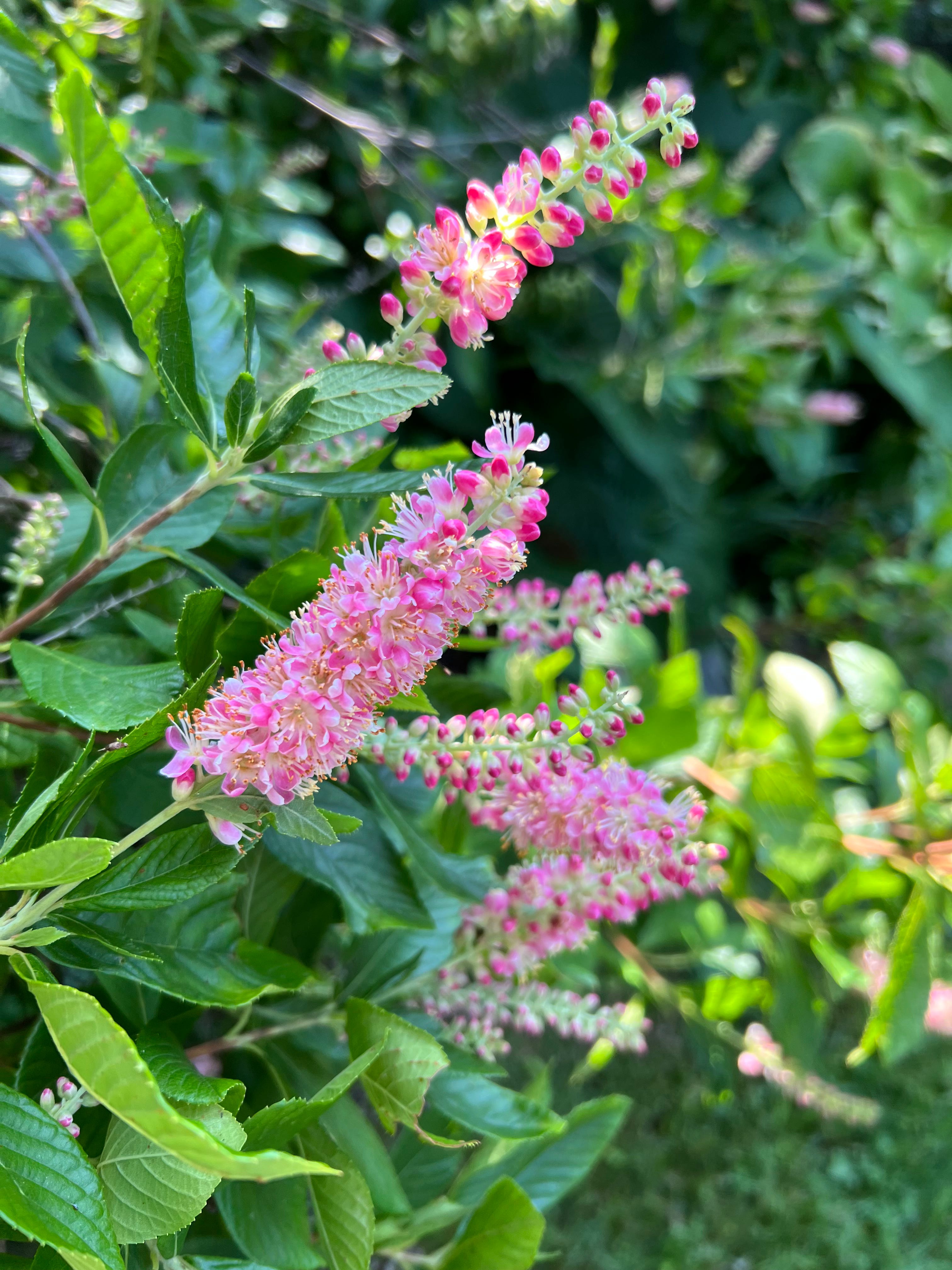
Summersweet blooms last summer by the house:
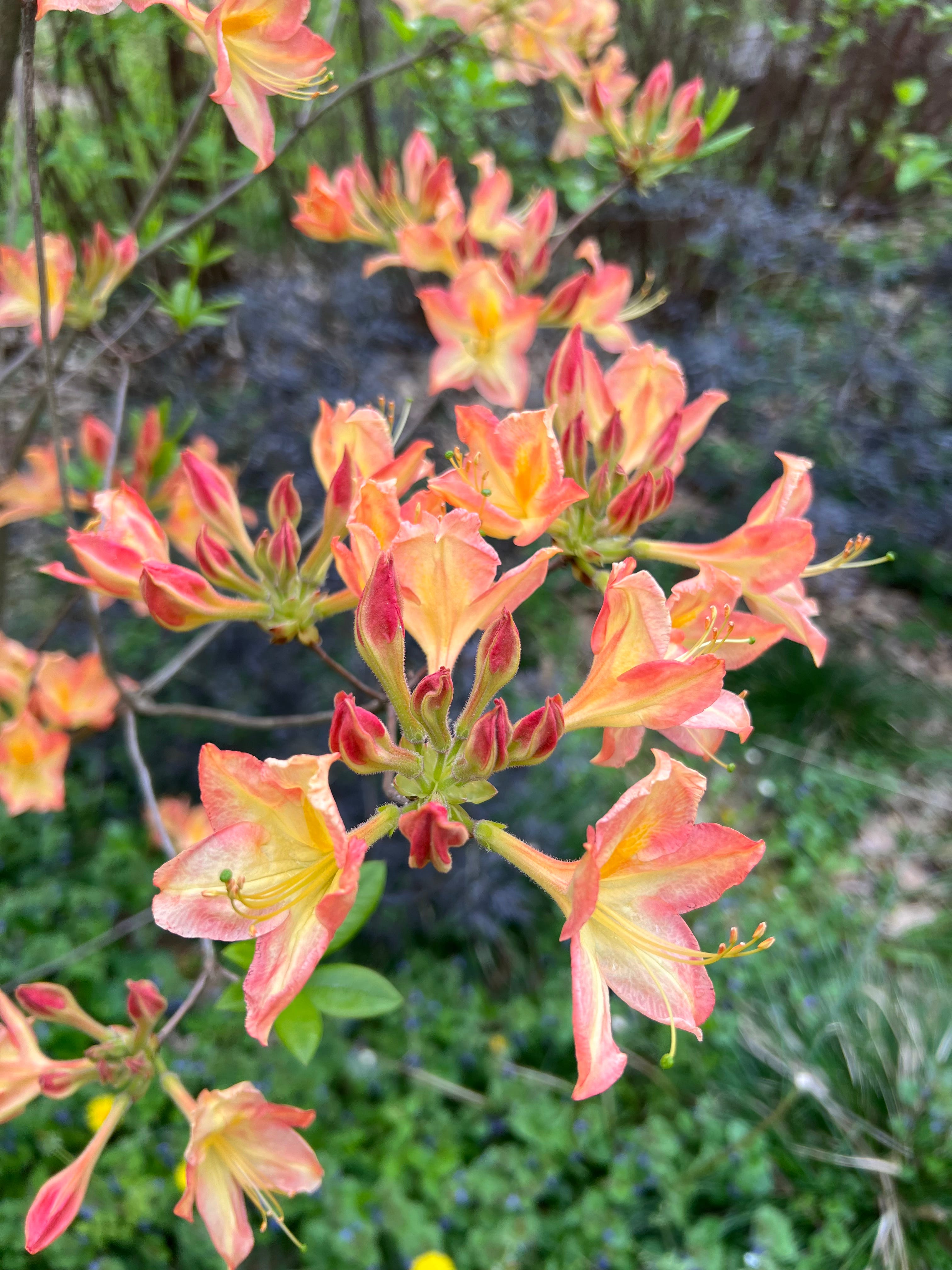
The native azalea by the barn, inherited from the previous owner and subject to heavy deer browse before we fenced, now puts on a lovely show each spring:
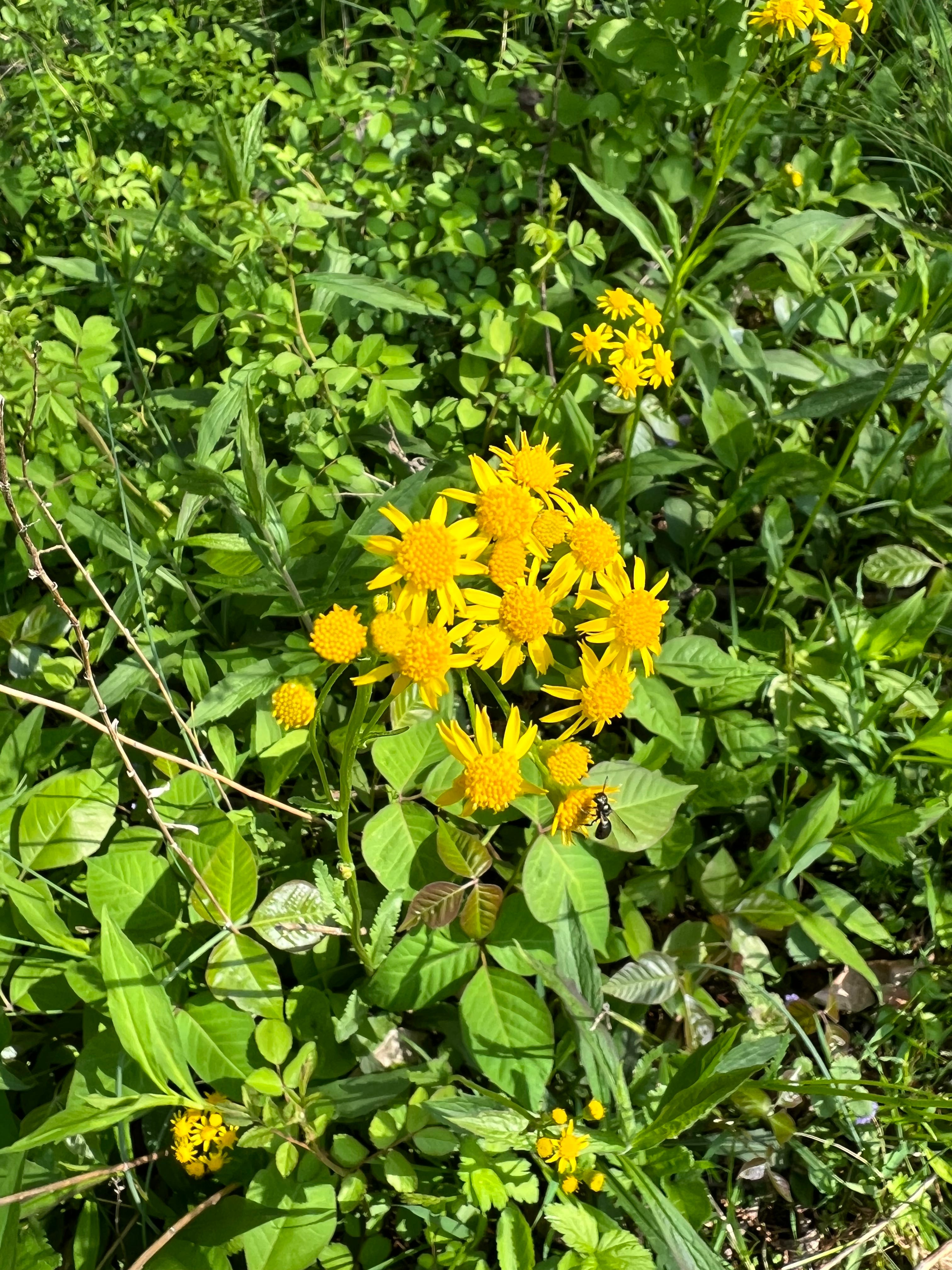
Native golden ragwort (Packera aurea) fights it out with native poison ivy (Toxicodendron radicans) and invasive multiflora rose:
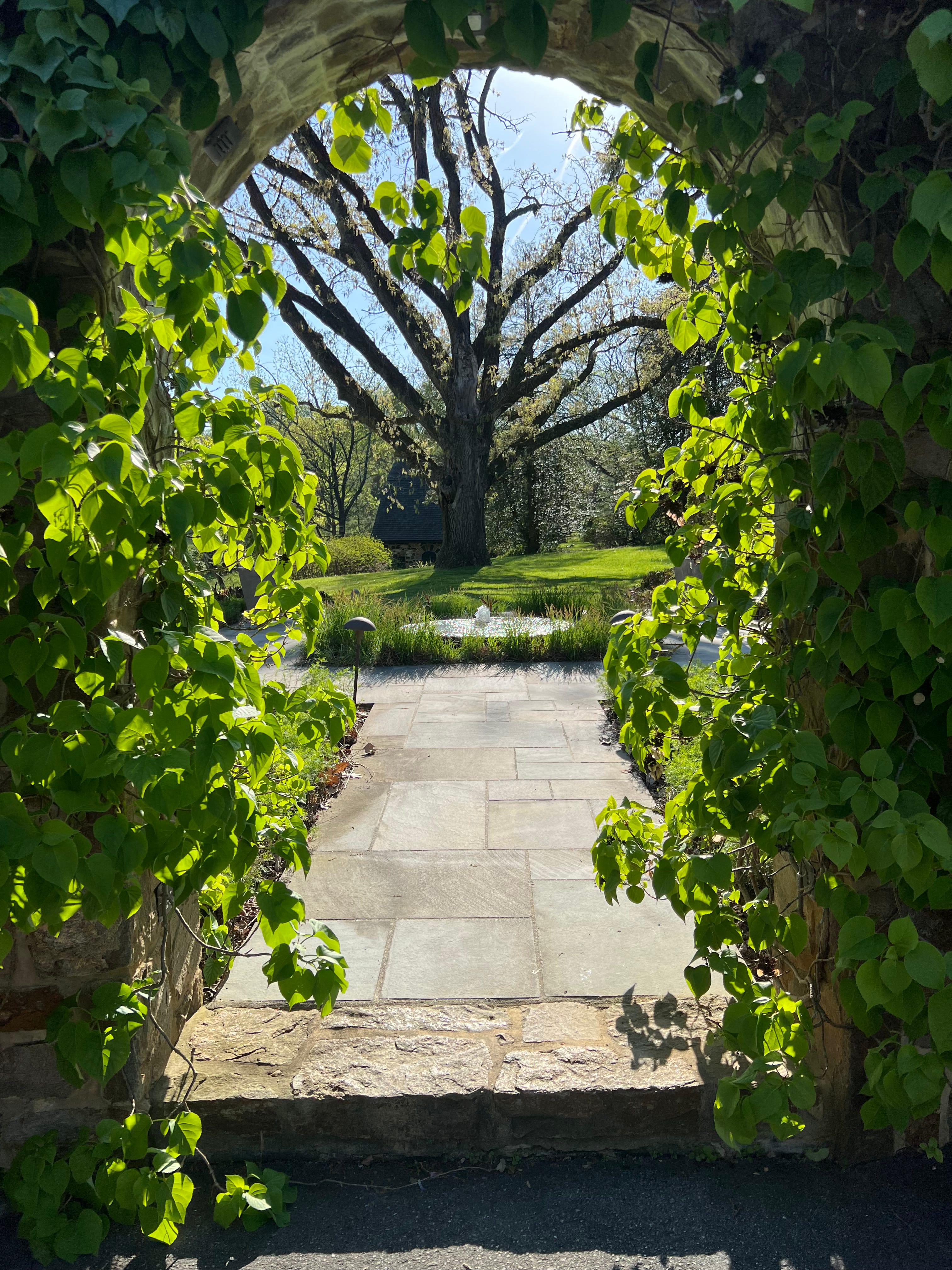
Spring view through the garden arch: