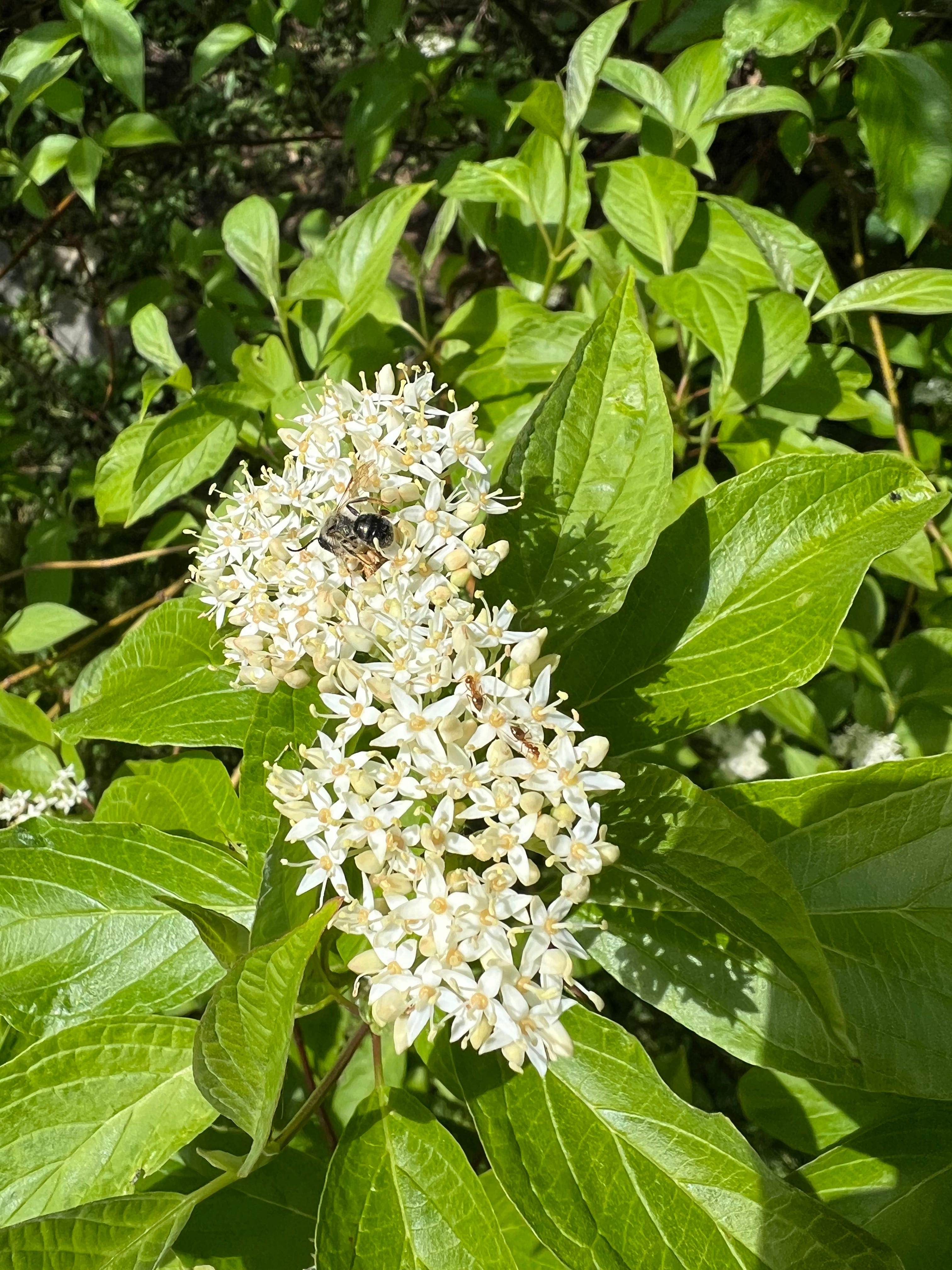
The Lonely Environmentalist
Bushwhacking off the path of least resistance.

Prophets are transitional figures, speaking truth to power, their message often met with anger from those who won’t face facts.
I don’t claim to be a prophet, but the climate scientist James Hansen is one. In a New York Times op-ed column yesterday, David Wallace-Wells summarizes Hansen’s and others’ view of climate change as follows:
Over the last decade or so, a high-profile group of alarm-raisers led by Hansen has published a series of papers and commentary suggesting that the scientific community has significantly underestimated the rate of warming, which, they argued, has been accelerating faster than the broader community has acknowledged. And that the fact that it is accelerating so quickly is a sign, they believe, that many conventional predictive models are calibrated wrong, that we are heading for much worse warming in the decades ahead than almost anyone appreciates.
It was always going to be difficult to garner an immediate response to climate change, which by its nature is a slow-moving phenomenon relative to normal human timelines. Likewise our overuse of chemicals, our destruction of wild habitats, our addiction to plastic. The consequences don’t come right away, but they are inevitable.
Meanwhile, certain progressives believe that too many strident calls for change over the decades have created a sense in the body politic that environmentalists are alarmists, that things never turn out as bad as the predictions. But I have long told those who will listen that the scientific experts on this subject, cautious by nature and bullied by moneyed interests, have been underplaying the risks we face, not exaggerating them. Change is arriving more quickly than predicted.
Now comes confirmation that the Hansens of the world have been right all along while many other scientists were indeed too timid. The Atlantic Meridional Overturning Circulation (AMOC), part of which is known more familiarly as the Gulf Stream, a current that keeps northern Europe temperate, appears to be breaking down significantly faster than anticipated, which could have catastrophic effects on one of the breadbaskets of the world, among other things. Earth sets new record-high temperatures nearly every year now. Arctic sea ice gradually but relentlessly disappears. Weather patterns are changing (hit that link before the deniers kill it). The El Niño this year—not historically manmade but now super-powered by our actions—may be shaping up to be the most consequential in modern history.
On other environmental fronts, the insect apocalypse is leading to the decline of certain animal and bird species, in particular swallows. Certain aquifers have been so overdrawn that entire cities may soon run dry. Microplastics have become ubiquitous, showing up even in remote Antarctica.
How do most people respond? Yawn. Over the past few years, I’ve watched in dismay as friends buy new internal combustion vehicles or gas stoves or inefficient heating systems. Landscapers won’t quit their gas machines or pesticides. Grocery stores wrap cucumbers in plastic. Cucumbers! Local governments and big companies set carbon reduction goals so far out into the future as to be meaningless—making them someone else’s problem, someone younger than today’s so-called leaders.
None of us is perfect, of course, least of all your humble correspondent. My carbon footprint is staggeringly high compared to that of someone living in a yurt on the steppes. But all the examples cited in the last paragraph are low-hanging fruit at this point, requiring changes so minor they have virtually no effect on one’s lifestyle. Solar with battery backup—at least at grid scale—is the cheapest form of electricity in most cases now, cheaper to install new than to run existing dirty power plants. Electric cars are less expensive to fuel and maintain than ICE vehicles, anyone with a garage or driveway can charge at home, and the average range exceeds what most people cover in a week. Magnetic induction stoves have become the favorite of many famous chefs.
Nope, most people say, I shall not depart the path of least resistance, which is to say the same old same old, world be damned.
What does this have to do with the work of a backyard steward? Everything.
That mythical future world of environmental consequences (which I imagined in my novel We Once Were Giants) is rapidly descending upon us.
This year, the American Southwest shattered heat records for March. Here in eastern Pennsylvania, after a snowy winter that approximated the old normal, a sudden warm spell brought early spring. But a hard frost soon followed.
The hardest part for a gardener to deal with may not be the extremes (yet), but the volatility that comes with climate change. Not coincidentally, that’s also the hardest part for living things in natural systems.
At Puddock Hill, tender leaves that emerged prematurely on young trees withered in that frost. Dozens of trees. I’ll know soon whether they’re dead. (Sycamores have a strategy for this—a backup set of buds. Most trees don’t.) What I’ll never know is how many insects that rely on patterns established over millions of years died when climatic volatility threw off the timing of their emergence with that of the flora on offer.
For a while, we experimented with planting trees from a zone south, thinking of climate change as a creeping phenomenon. But while cold-loving species like blue spruce seem to be in trouble because of warmer average winters, the volatility of climate change also promises a less stable jet stream with extremely cold air (polar vortexes) pushing south from time to time. Sure enough, when this happened a couple winters ago, we lost all the loblolly pines we’d planted and that, up until then, had been thriving.
What happens if generational drought, driven by climate change, comes to these parts? Or the third 500-year flood in a row? More violent thunderstorms on the regular? I don’t know, but I fear many of us will find out in this lifetime.
It has been my habit, when I wax pessimistic, to force a hopeful ending on these essays. Now I look on those frost-burned trees, and I don’t know. The work of an environmental steward is lonelier than it ought to be. Even people without gardens or who don’t care about bees need to make an effort here. We have one Earth. No one can hide forever from the consequences of what we’ve wrought.
Next time, buy the damn electric car.
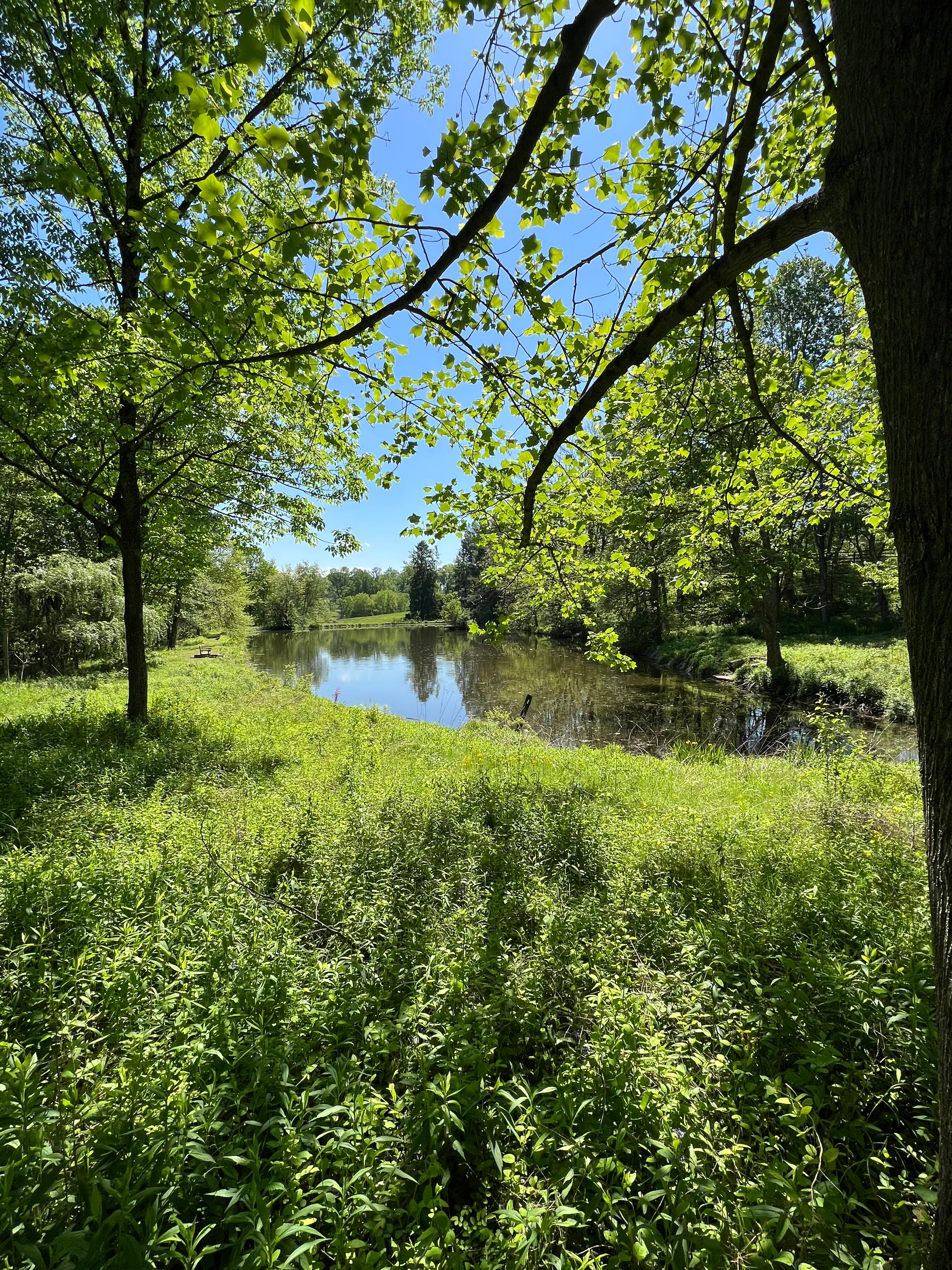
The big pond in spring, looking southwest:
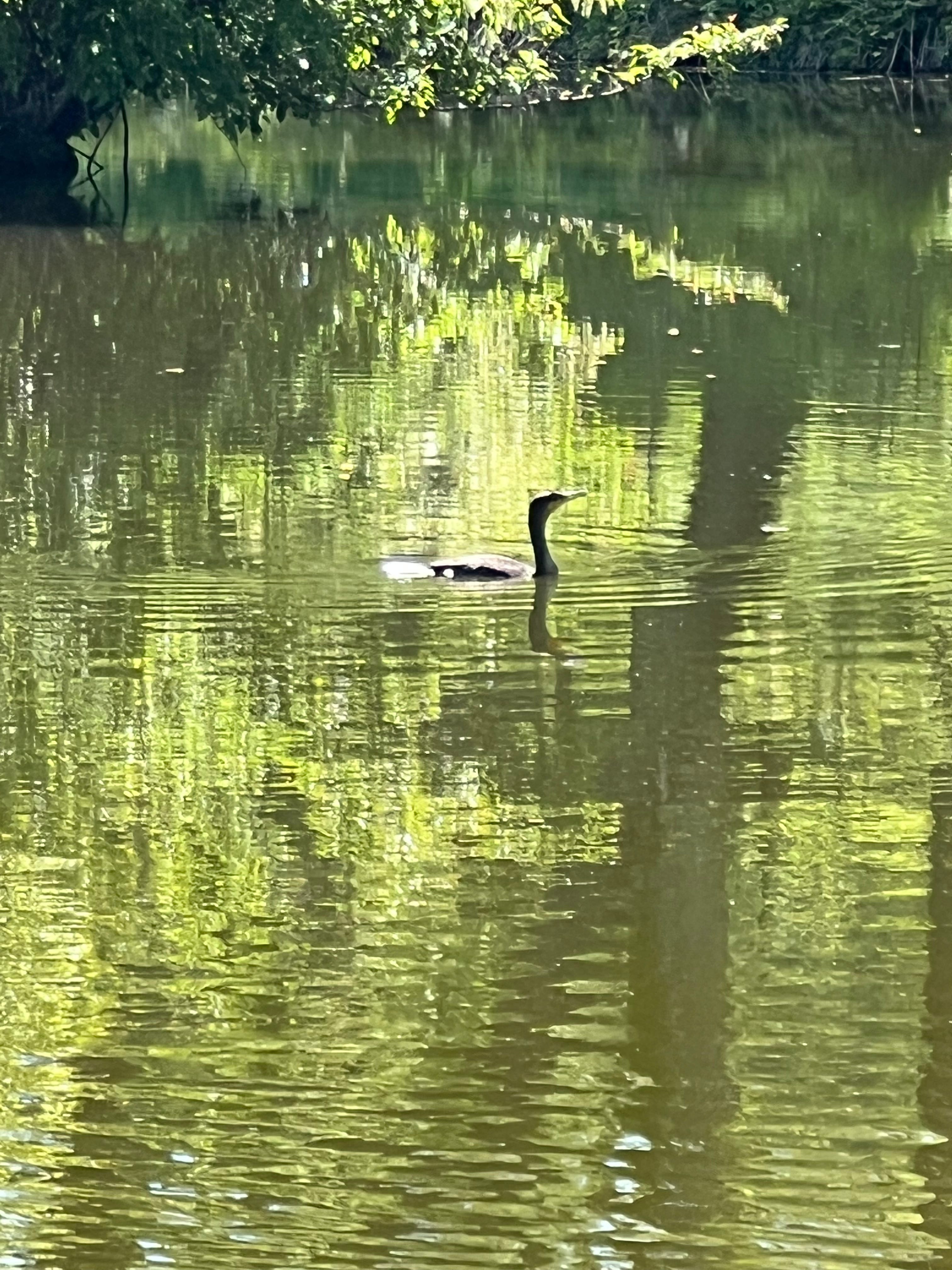
A double-crested cormorant came to visit:
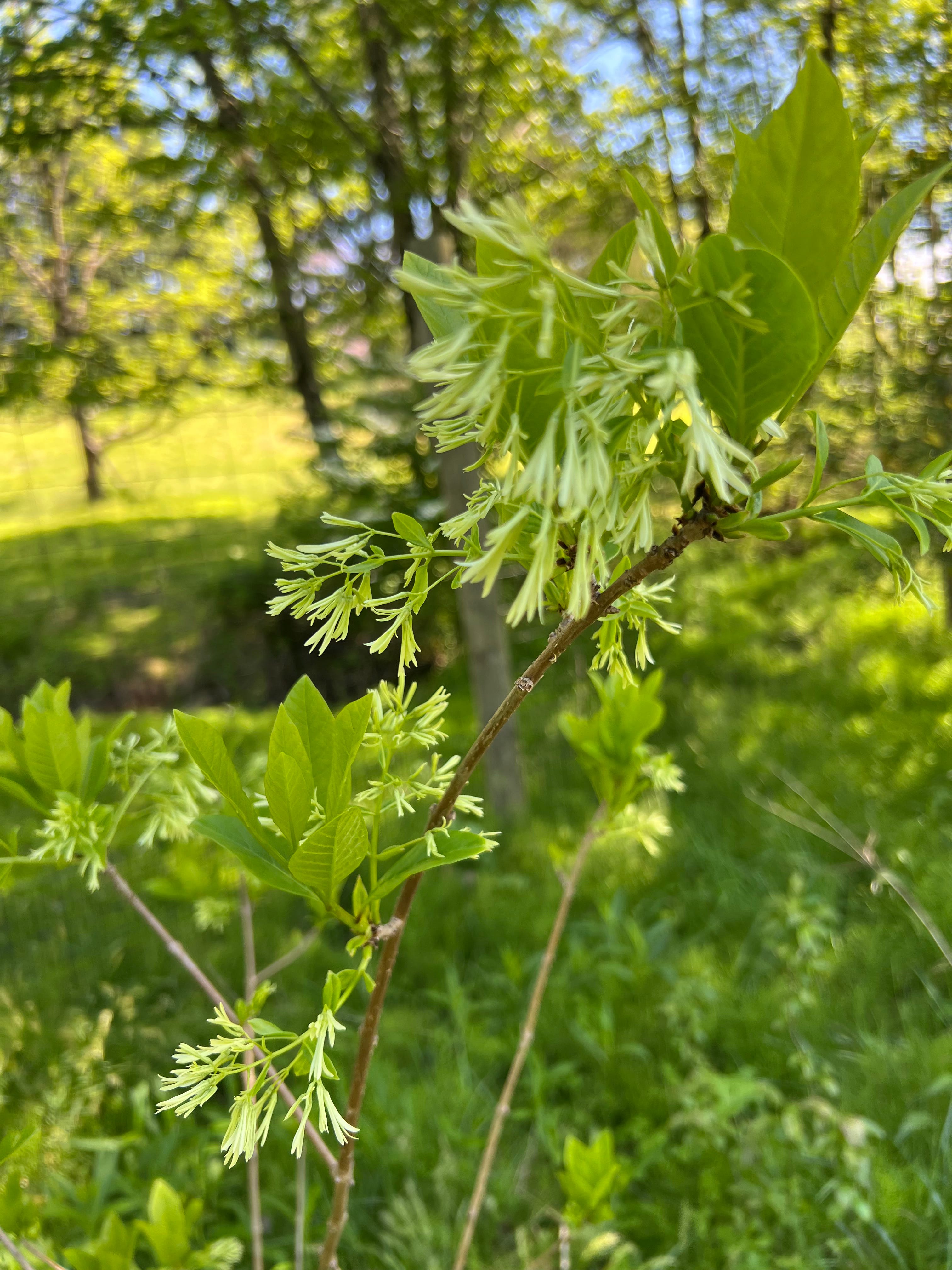
Native white fringe tree (Chionanthus virginicus) flowers between the big pond and the stream:
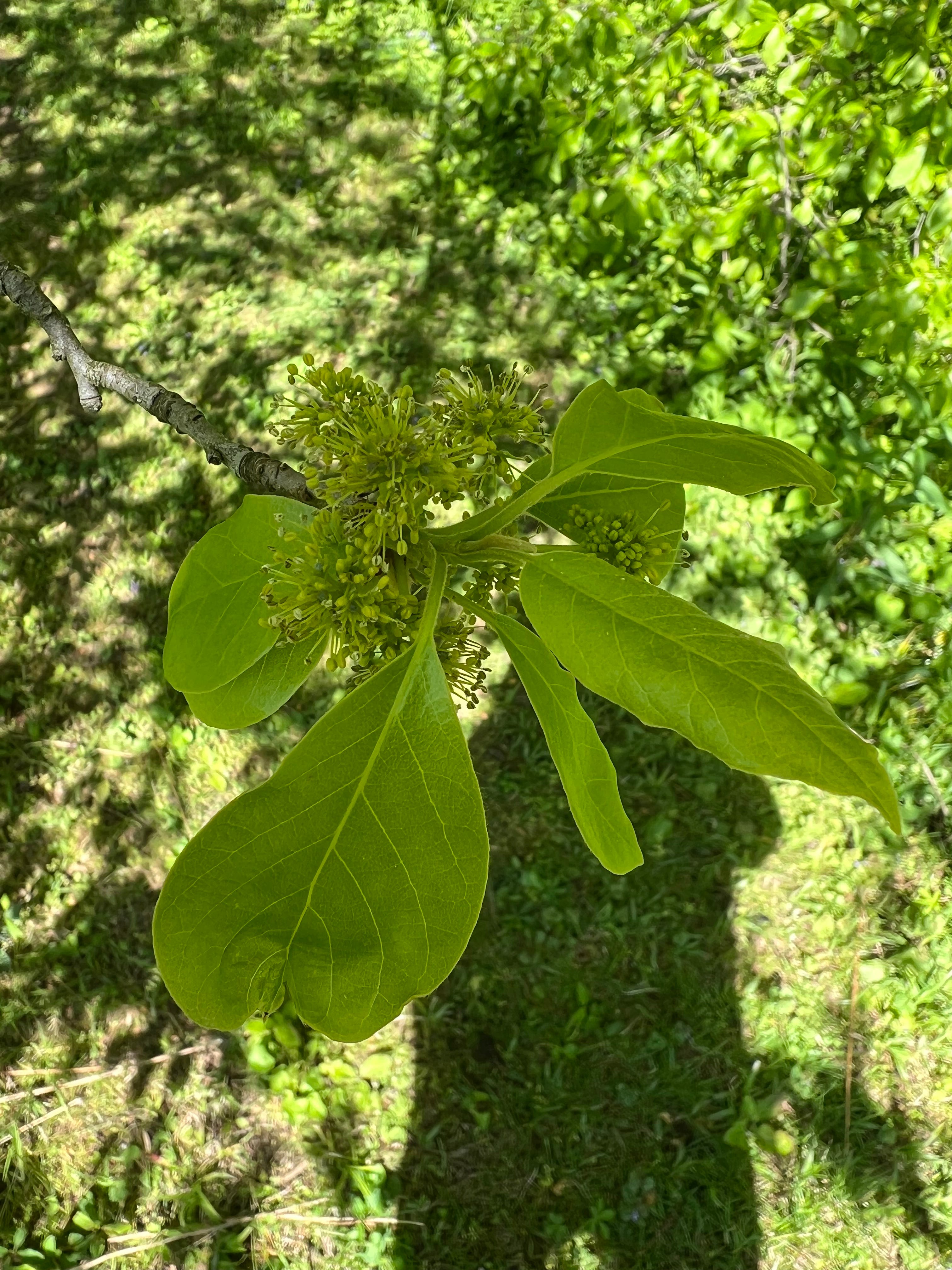
Native black tupelo (Nyssa sylvatica) flowers by the big pond:
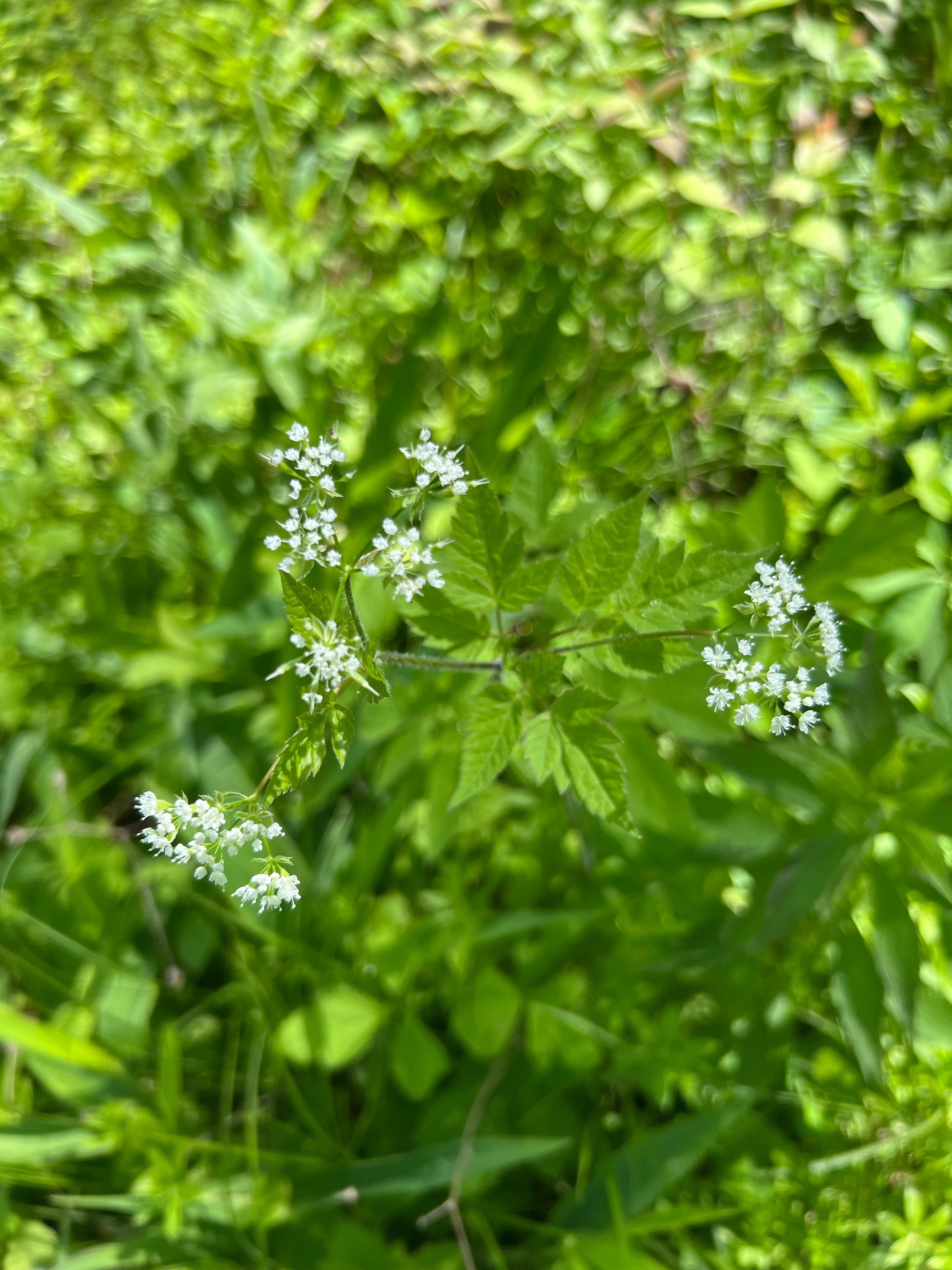
Native aniseroot or long-styled sweet-cicely (Osmorhiza longistylis) (which I’ve somehow never notice before), a larval host plant for the black swallowtail butterfly (Papilio polyxenes), is flowering in profusion above the big pond:
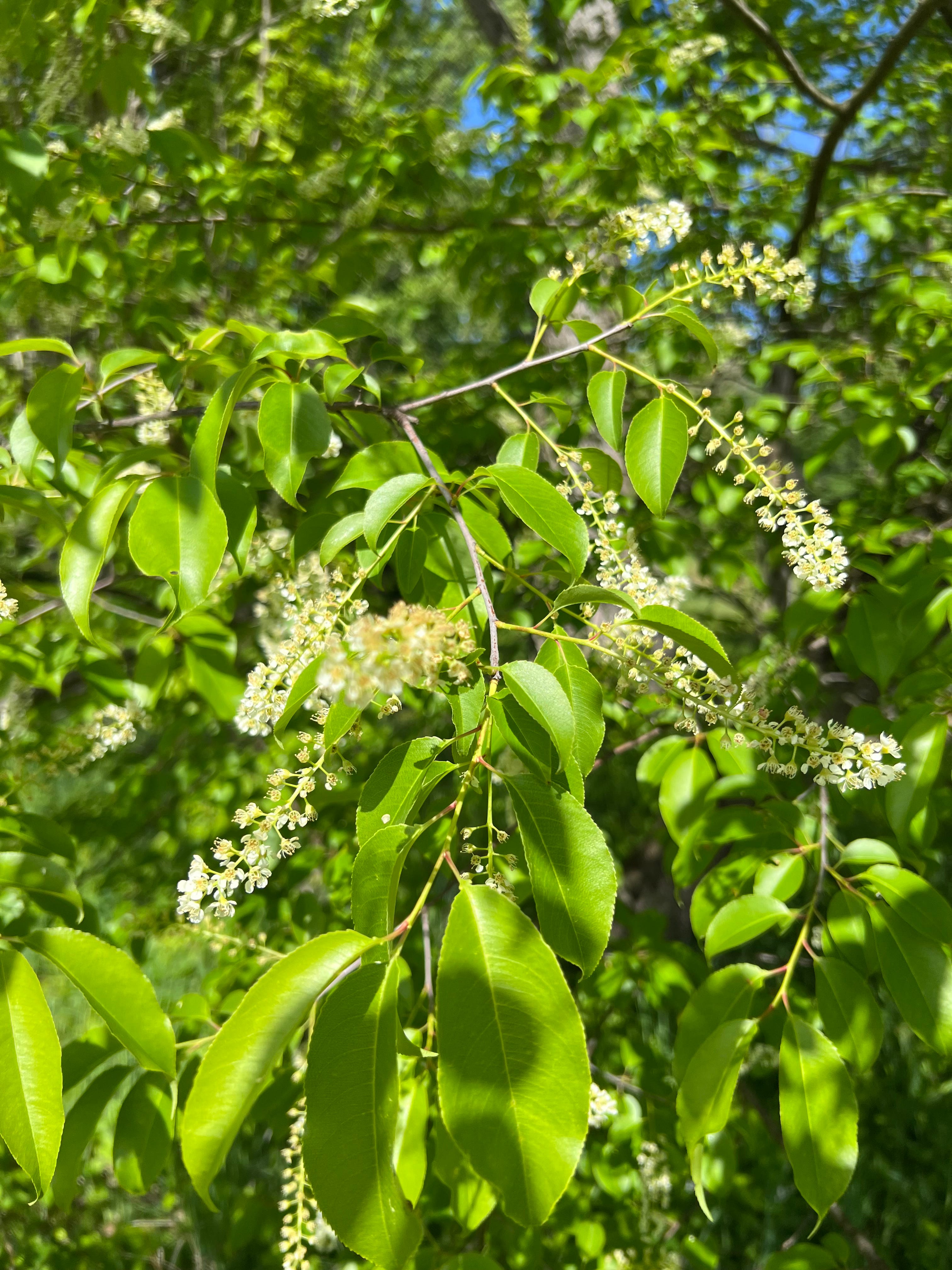
Native black cherry (Prunus serotina) flowers at the edge of the barn meadow:
Native red osier dogwood (Cornus sericea) flowers by the barn: