Plant What Works
Puddock Hill Journal #117: Often, more of the same is the answer.

I’ve talked before about my prejudice against planting native perennials (or even shrubs) in great variety but small quantities.
There are a couple of reasons this can be problematic. From a design perspective, it just tends to look bad. Unless you’re standing right over the plants—and one rarely is—they become unnoticeable from afar, and even up close it makes the garden designer look indecisive. Planting fewer varieties in great sweeps, proportionate to one’s garden, shows design intention.
Second, and more important in my view, too great a variety of flowers in too small quantities makes pollinators waste energy feeding. Nature has designed a system whereby different plants flower at different times, sustaining pollinators throughout the season. But installing flowering plants in sparse numbers forces pollinators to work too hard for sustenance. Imagine if McDonald’s only sold one French fry a day in each restaurant and all you can eat is French fries—AND you have to walk. By the time you get to the next McDonald’s for your single French fry, you’re exhausted. This is an absurd example, but back in the garden it is not a recipe for thriving pollinators.
I do admit, from a gardener’s perspective, that planting fewer species in larger masses has its drawbacks. If the space isn’t big enough, it’s harder to have enough varieties to keep something in bloom all the time. So what if, on smaller suburban or urban lots, we coordinated with likeminded neighbors? You plant the native thing that pops in June and I’ll plant the native thing that blooms in July. It’s worth a shot.
But, as we know, gardening involves trial and error. So even for those of us with space, the prospect of a giant swath of plants all shriveling at once instills dread. Like anyone else, here at Puddock Hill we have certainly had our share of plants failing to thrive—as well as those that went rogue. (Planting sumac in the patio garden proved to be a big mistake; keep this important native pioneer at the margins of the property.)
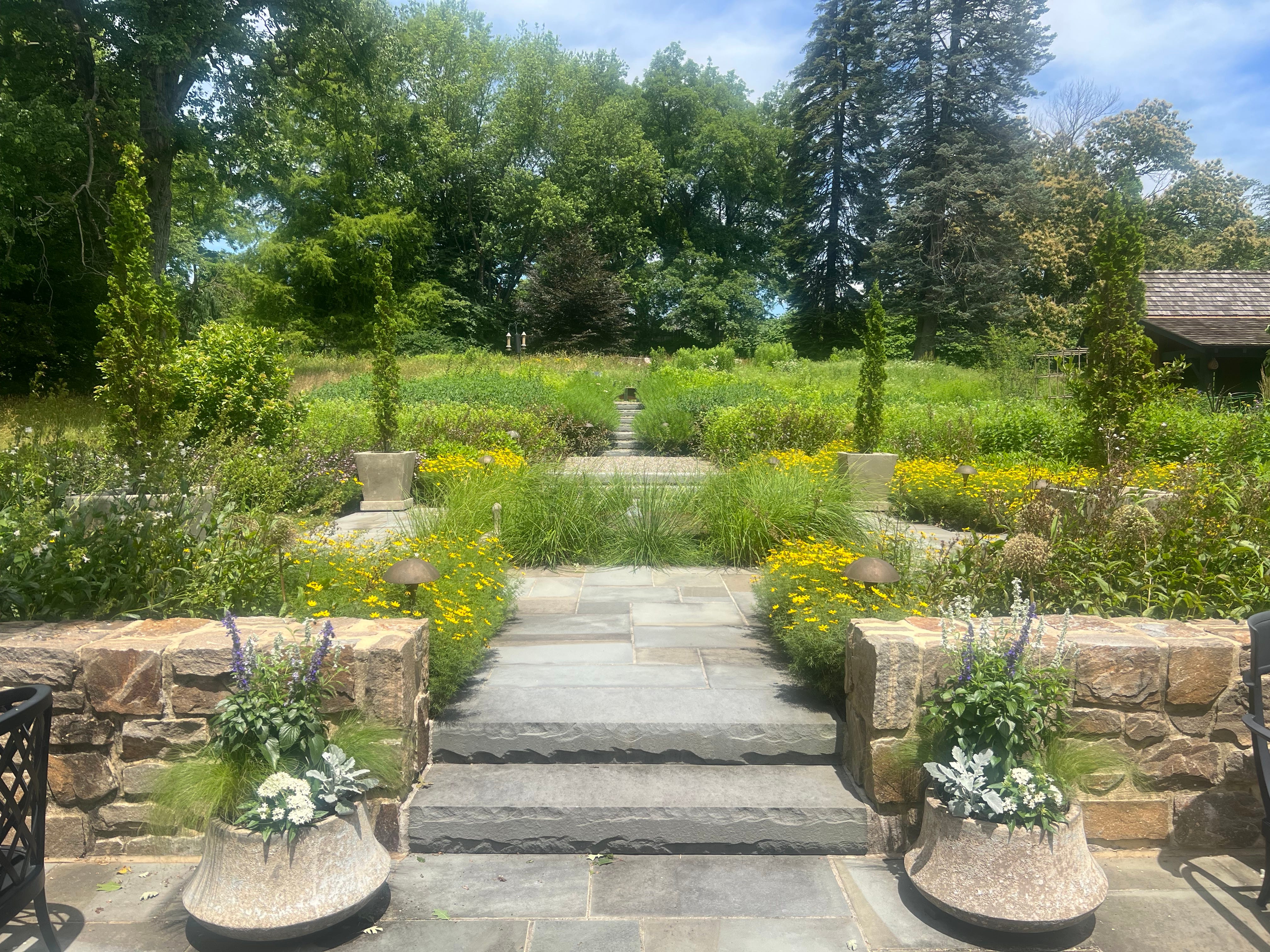
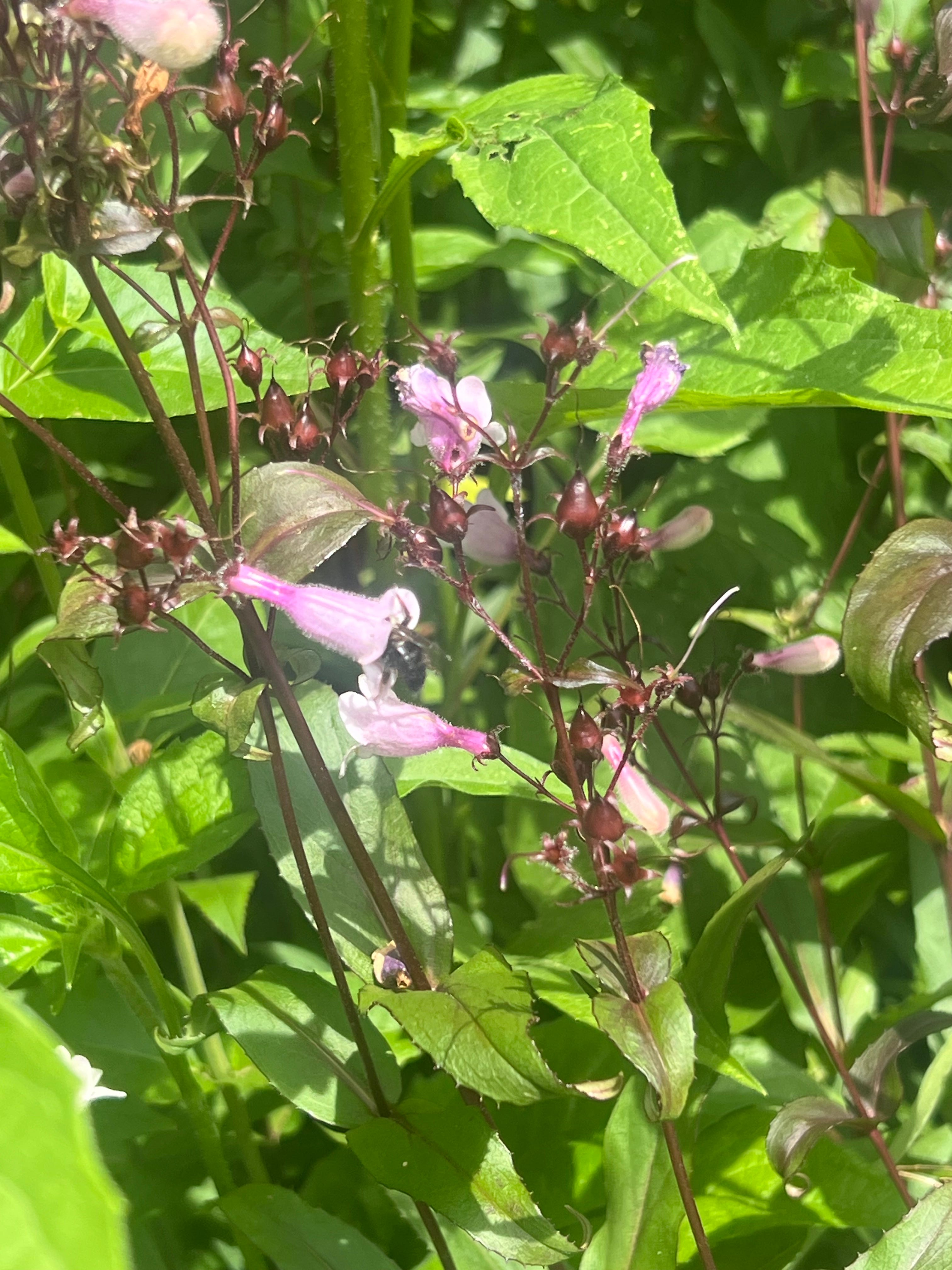
Up to a point, we let successful perennials intermingle. One exception in our garden is northern sea oats (Chasmanthium latifolium), which we do spend a good bit of time pulling up. (Our garden designer warned us!) But we generally let the mountain mint (Pycnanthemum spp.) and beardtongue (Penstemon spp.) and several other species, meander on their merry way, filling in spots where other plants were unhappy.
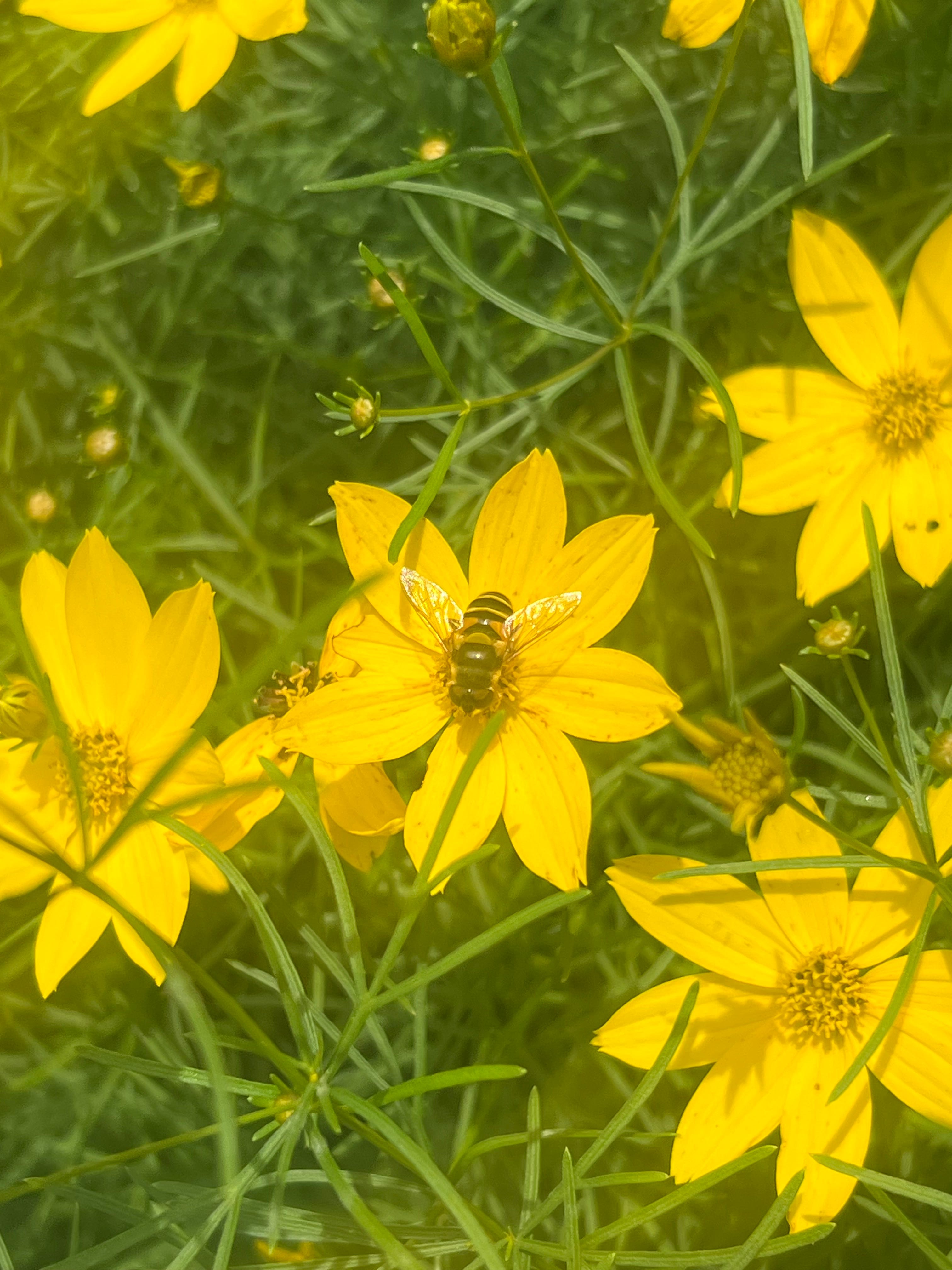
Another approach is to see what’s working and add more of it nearby. We have done this with our threadleaf coreopsis (Coreopsis verticillata), for example.
Finally, in spots where nothing ever seems quite happy, we chose to fill in with native plants that have a reputation for ironclad hardiness. Last year, we introduced a variety of hyssop (Agastache spp.), and it’s looking great. This year, we introduced turtlehead (Chelone spp.) into a couple of shadier spots, and so far, so good.
It’s fun to watch the bumblebees transition from beardtongue, which is finishing up, to coreopsis, and soon to mountain mint and hyssop. Since we planted all of these in volume, the pollinators should have plenty to eat.
The patio garden looking north:
A bumblebee (center left) visits waning beardtongue:
A transverse banded drone fly (Eristalis transversa) stops to sip the coreopsis:
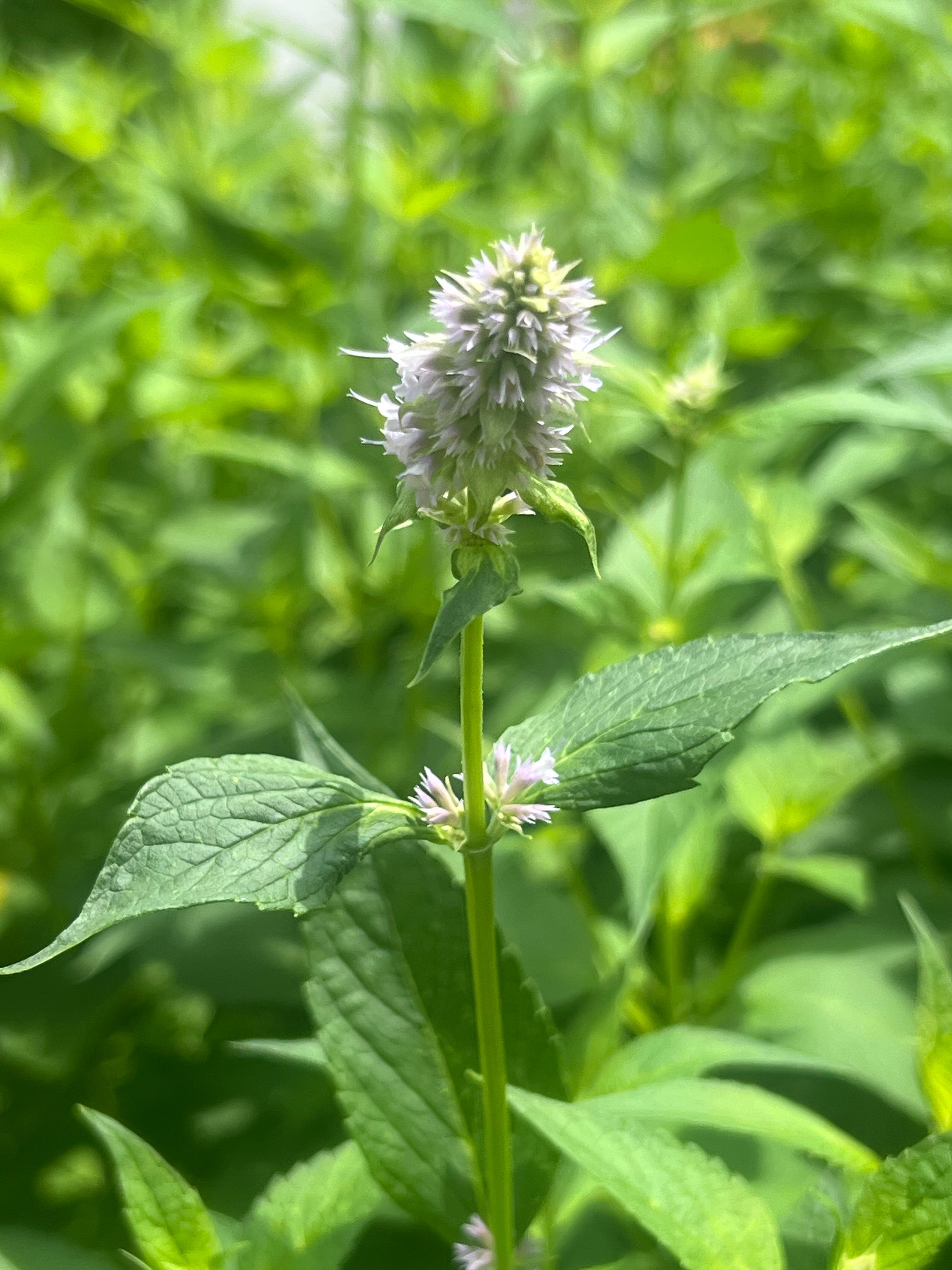
First blooms begin to open on the hyssop:
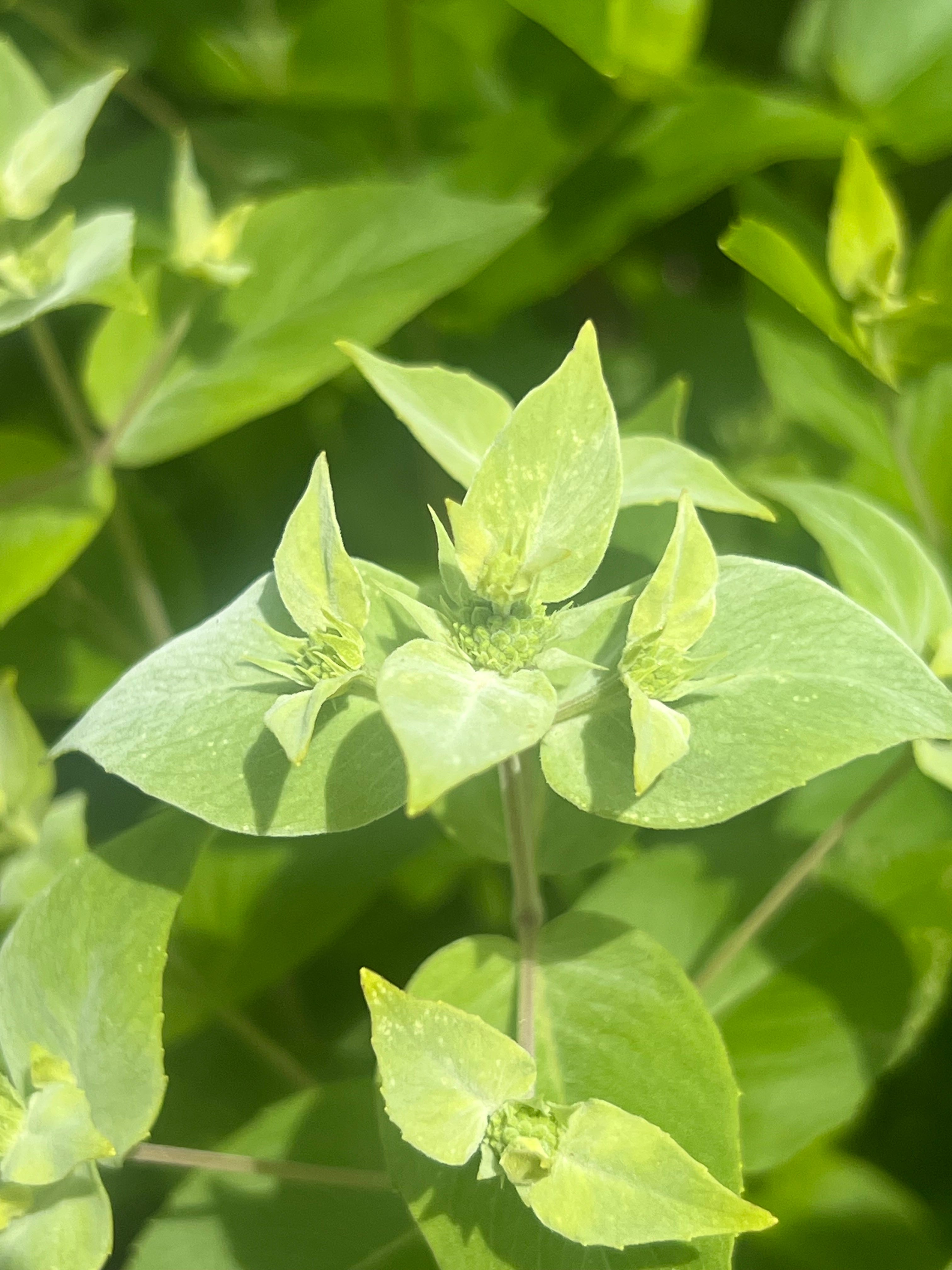
As mountain mint gets ready to pop:
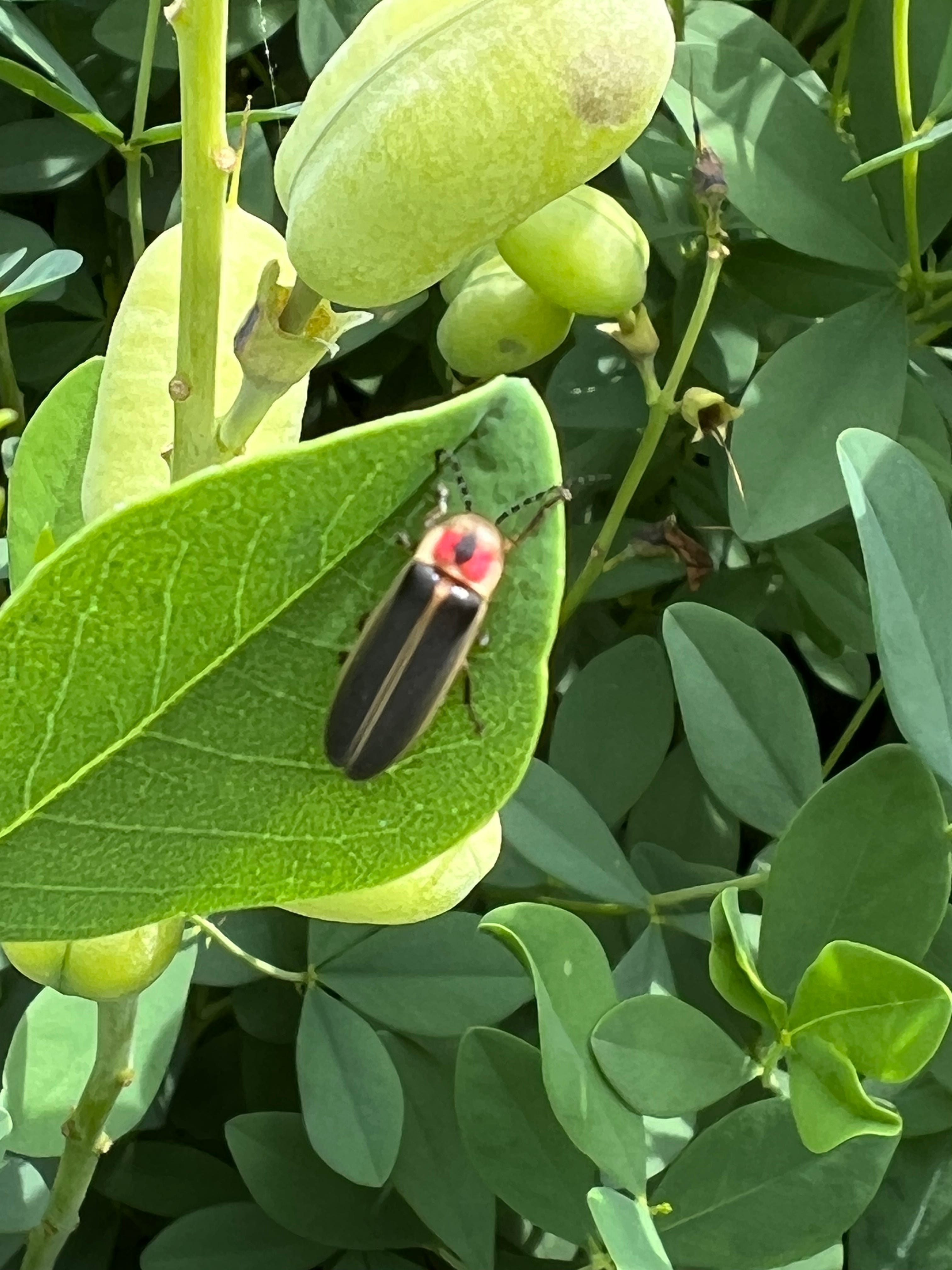
A common eastern firefly (Photinus pyralis) rests near wild indigo (Baptisia spp.):