Let There Not Be Light
Puddock Hill Journal #116: Light and consequences.

Only once in my life have I heard a reading of Genesis at a funeral.
If you are local to the Wilmington, Delaware area, it may not surprise you that the funeral was that of my wife’s grandmother, an avid amateur naturalist, gardener, backyard steward (long before I coined the phrase) and, eventually, promoter of native plants.
I don’t recall how far through the book the reading went at her service, but here are a few passages worth noting (King James version):
11 And God said, Let the earth bring forth grass, the herb yielding seed, and the fruit tree yielding fruit after his kind, whose seed is in itself, upon the earth: and it was so.
12 And the earth brought forth grass, and herb yielding seed after his kind, and the tree yielding fruit, whose seed was in itself, after his kind: and God saw that it was good.
The above describes species perpetuating themselves.
29 And God said, Behold, I have given you every herb bearing seed, which is upon the face of all the earth, and every tree, in which is the fruit of a tree yielding seed; to you it shall be for meat.
30 And to every beast of the earth, and to every fowl of the air, and to every thing that creepeth upon the earth, wherein there is life, I have given every green herb for meat: and it was so.
The above describes, in brief, what scientists call the trophic chain, known colloquially as the food chain.
But let’s get back to the beginning of the beginning:
1 In the beginning God created the heaven and the earth.
2 And the earth was without form, and void; and darkness was upon the face of the deep. And the Spirit of God moved upon the face of the waters.
3 And God said, Let there be light: and there was light.
4 And God saw the light, that it was good: and God divided the light from the darkness.
Light. Brought to you by the Spirit of God moving across the water. Energy.
I thought of Genesis and the beginning of light and life today for a few reasons. First, because I have another funeral to attend that happens to be for Pam’s uncle, the youngest son of the woman who chose to have Genesis recited at her funeral.
The second reason is that I received a post today from Substack writer Dennis Ouelette, who writes the Earth Mastery newsletter under the cheeky pen name Nabu. His jam is basically finding hidden or forgotten meaning in the Old and New Testaments by delving into the original text (apparently he understands Hebrew, Aramaic, and Greek), and today’s post was about Genesis.
Doing full justice to his analysis is not the subject of this brief essay, so I can’t summarize all of it. But a few things jumped out at me.
The first word of the Hebrew Bible is Bereshit, but according to Nabu, “The most accurate translation of Bereshit is not in the beginning. It is through wisdom, creation begins. Or within the primary organizing intelligence, existence takes form.”
To put this in lay (or naturalistic) terms, the rules of physics guide creation.
Second, the word usually translated as “created” is bara, but bara “does not mean made or constructed or built. It describes the act of bringing something into being from potential. Shaping what exists from what was latent.”
In other words, nothing gets created from nothing.
The third thing that caught my eye is worth quoting at length:
And the spirit of God moved upon the face of the waters. The Hebrew is Ruach Elohim.
Ruach is one of the most important words in the entire Hebrew Bible. It means breath, wind, spirit, and life force simultaneously. The Hebrew language does not separate these into different words because the ancient Hebrew understanding did not separate these into different realities. The breath and the spirit were the same thing at different scales.
Ruach is grammatically feminine.
The spirit of God moving over the waters at the first moment of creation is not a neutral force. In the original Hebrew she is feminine. The divine feminine was present at the very beginning, performing the first act of creation. She is the first mover in the entire biblical narrative.
This sure makes me think of Mother Nature.
The fourth thing that stands out is also worth quoting at length from Nabu:
And God said let there be light and there was light. The Hebrew word for light is or.
Or is straightforward in its primary meaning. Visible light. But the context in which it appears is not straightforward at all.
Light is created on the first day. The sun, the moon, and the stars are not created until the fourth day. For three days, light exists without any physical source.
The ancient rabbinical tradition recognized this immediately and developed an extensive body of commentary around it. The light of the first day was not the physical light of the sun. It was the primordial light. The divine light. The light that precedes physical manifestation. Some traditions called it the Or Ein Sof. The light of the infinite.
Nabu takes this in the direction of mysticism, but let’s settle on something a little more concrete. Put simply, without light there is no life.
Yet, God (or physics or the serendipity of the universe) divided the light from the darkness. We—and all things around us—exist under the sun and the moon, daylight and night time.
Which brings me to the final reason I thought of Genesis today. The New York Times reported on a study published in the journal PNAS Nexus that found light pollution extends the allergy season by disrupting the natural rhythms of trees and other plants, essentially lengthening their pollen-producing time.
Artificial light messes with nature.
We already know that light pollution affects the abundance of certain insects. It disrupts the navigation of moths, for example, interferes with the breeding of lightning bugs, and potentially exposes nocturnal arthropods—half of all insect species—to disproportionate predation.
Mother Nature, in her wisdom, evolved life that depended both on light and darkness. Genesis got that right. But this business of giving man dominion over everything, which—to stretch the metaphor—includes controlling light, turns out to have unintended consequences.
If you live in a city, there’s not much you can do about this. But if you don’t, honor thy Mother and turn down the outdoor lights.
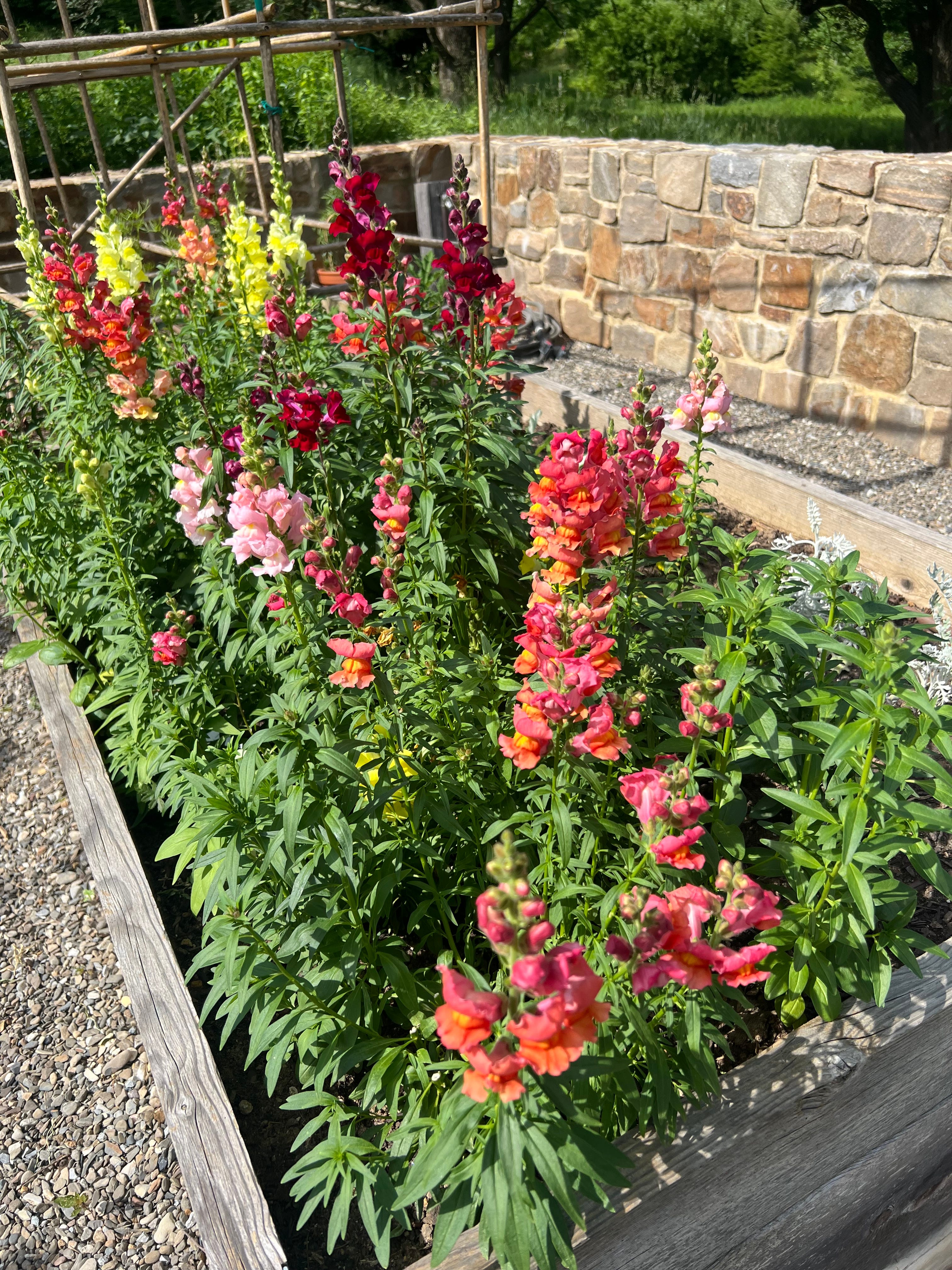
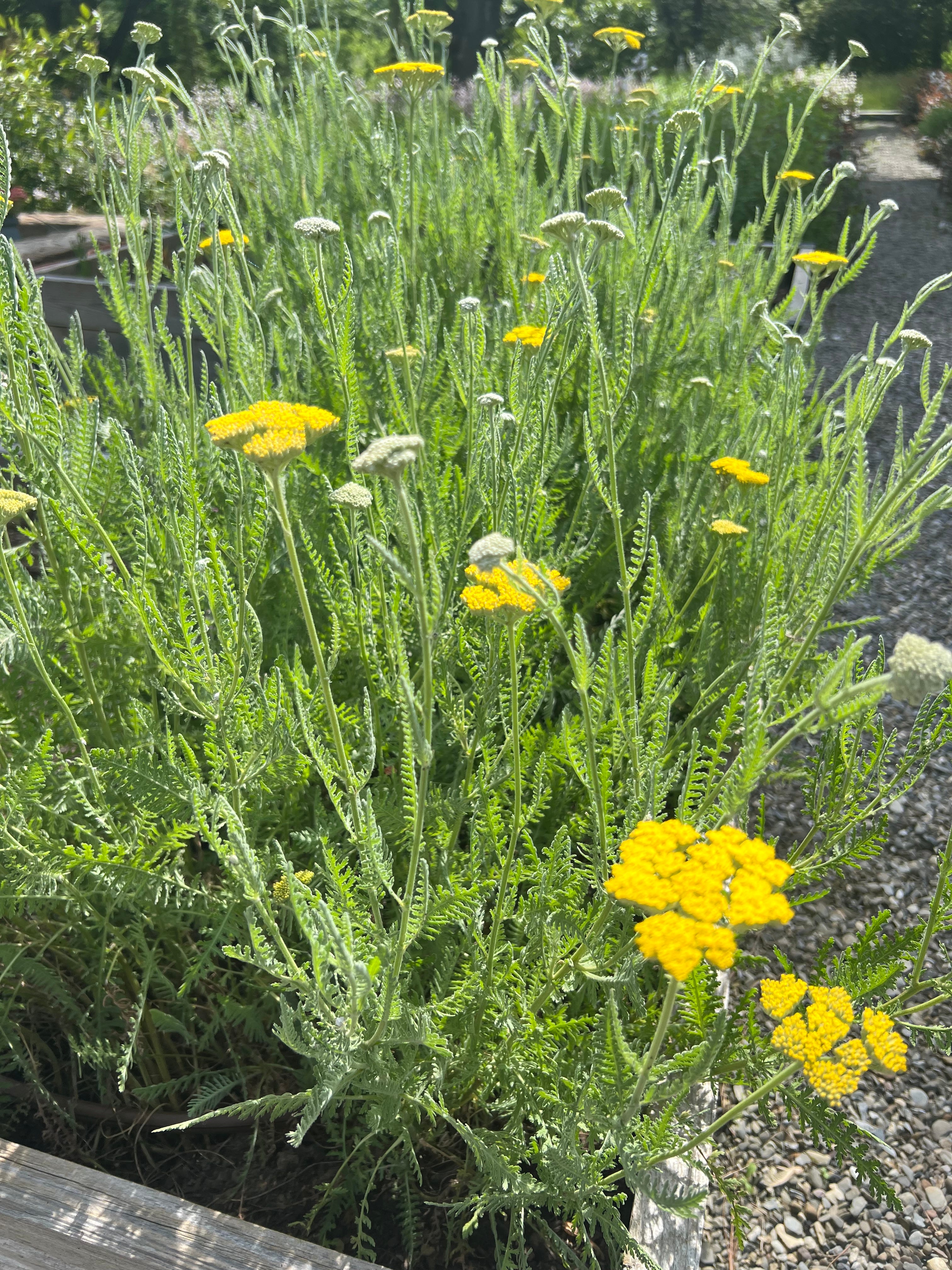
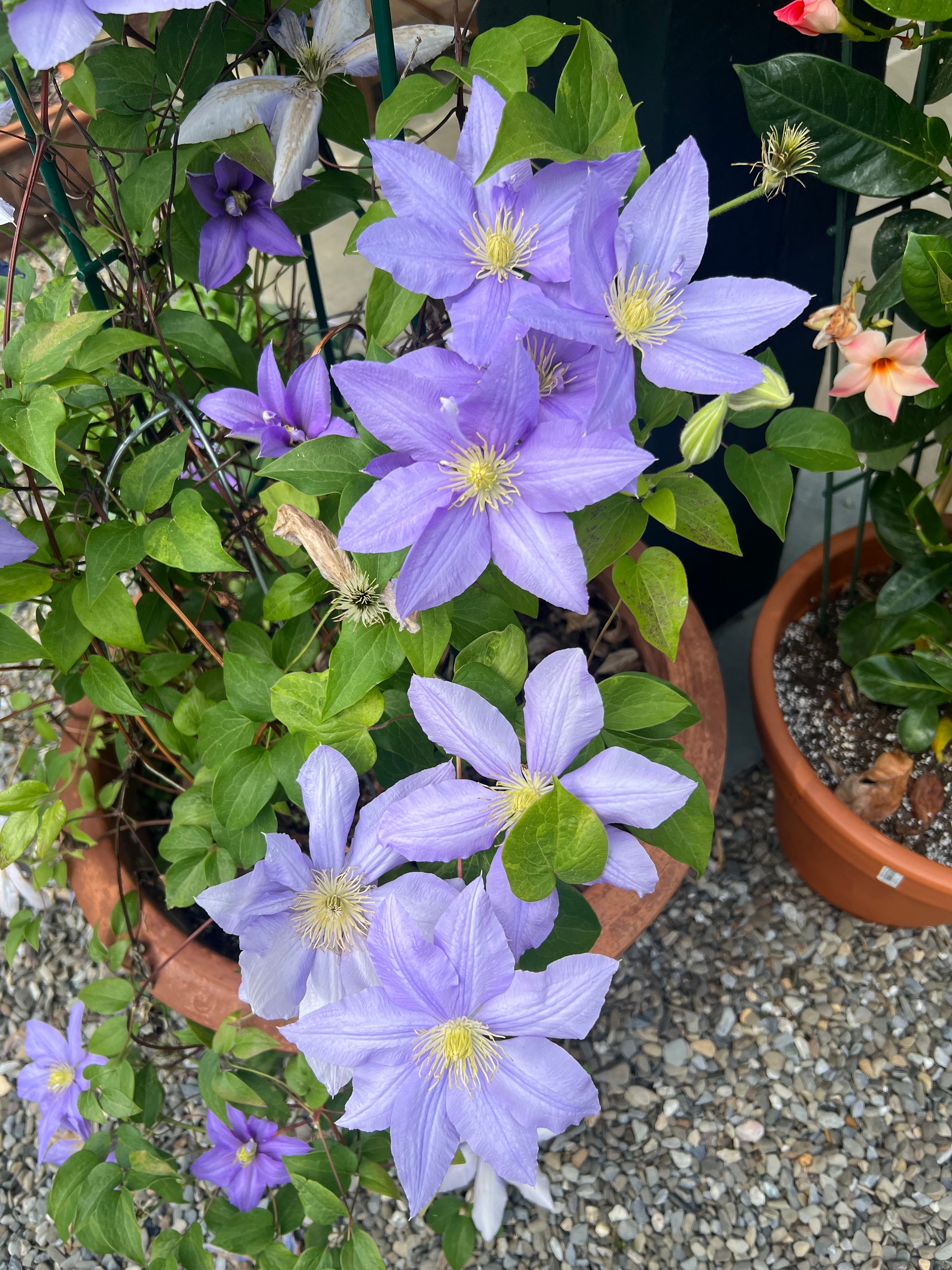
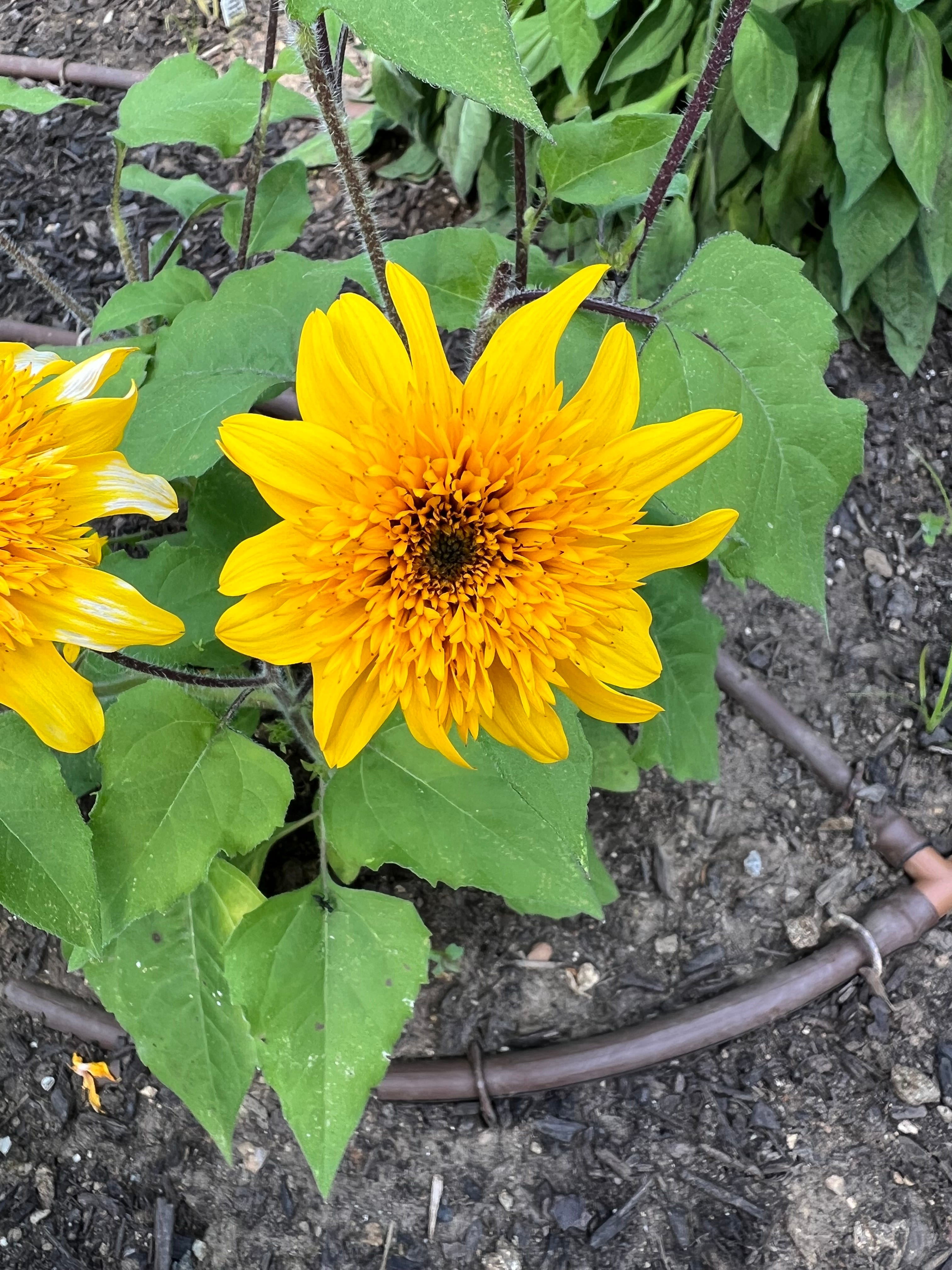
Early days in Pam’s raised bed garden: