Invasive Profile: Canada Thistle
I’m not sure I’m winning the war on this persistent invader.

After being advised by her gardening service to use the herbicide Lontrel (active ingredient clopyralid) on Canada thistle in her planting beds, a friend and subscriber recently wrote to ask whether I have used chemical treatment.
The short answer was no, which is not to say I am having complete success fighting off this tough invader.
Canada thistle (Cirsium arvense) is listed as a noxious weed in Pennsylvania and nearly three dozen states. Its common name is a misnomer; the plant originated in Eurasia. It has been with us in North America for 400 years, however, and despite that long-term residency, few natural checks on its spread have arisen.
At Puddock Hill, where I persist in my attempts to avoid all herbicides, Canada thistle is one plant that sometimes has me thinking I am delusional. It crops up in so many places—including in the midst of meadows that are nearly impenetrable in summer—that it’s nearly impossible for me to keep every plant from going to seed. But I do try. And of course seeds can carry as much as half a mile from neighboring meadows, which I have no control over.
At the sunny edge of the wet woods (most of what I call the wet woods still gets sun), a colony popped up last year. At least, that’s when I noticed it. I yanked out hundreds by hand, pulling straight up in wet weather in an attempt to free the whole tap root. This year, in the same exact place, I had to repeat the exercise. Another bunch has been cropping up in the Aronia bed by the house, where I hand pulled maybe forty of them a couple weeks ago. In yet another place, the no-mow area north of the house, I have combined string trimming and hand pulling. Yet here it is:
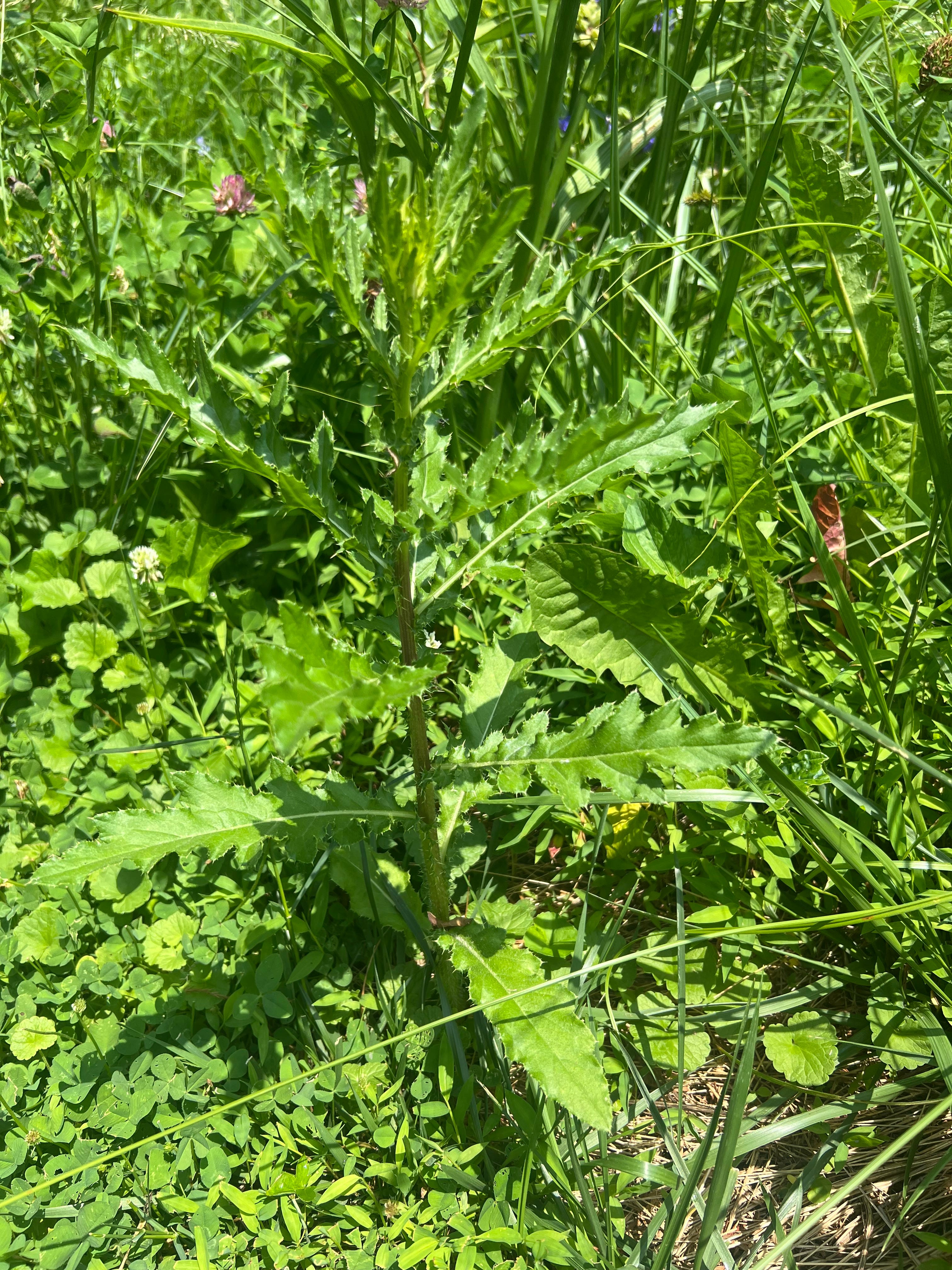
It all returns.
Canada thistle drives down a long tap root. I try to get all of it but seldom if ever succeed. Its roots also spread laterally several feet, and even root fragments can turn into new plants. (This is a common characteristic of at least several invasive plants, particularly Japanese knotweed, which is one plague we have fortunately not seen here yet.) The plant can also persist through years of mowing, biding its time close to the ground, continuing to store energy.
Since Canada thistle can stand up to regular mowing, what hope do I have of defeating it with occasional string trimming or meadow mowing? Not much where there is thin competitive cover. I’m at best managing the invasion, not defeating it.
So the idea of using herbicides becomes tempting. But even in addition to my belief that we should avoid unnecessary chemicals due to potential unintended consequences, the most effective herbicide against Canada thistle, clopyralid, while often applied to golf courses and farms, “should not be used on residential lawns,” according to Penn State Extension. Those of us on wells would be well advised to think twice and three times about that warning.
It seems the most environmentally responsible way to manage Canada thistle is to attempt to outcompete it. In the Aronia bed, which has become lush, it seems to come back more slowly after pulling than in other places. In the meadows, while, as I noted above, it is usually present in some quantity, native goldenrod has proved a worthy competitor, keeping it in check. More conventionally but less supportive of nature, trials have shown that certain thick turf grasses give Canada thistle a run for its money.
So, as with so many invasives, results are mixed. But, at least for now, I remain an advocate of any strategy but herbicides.
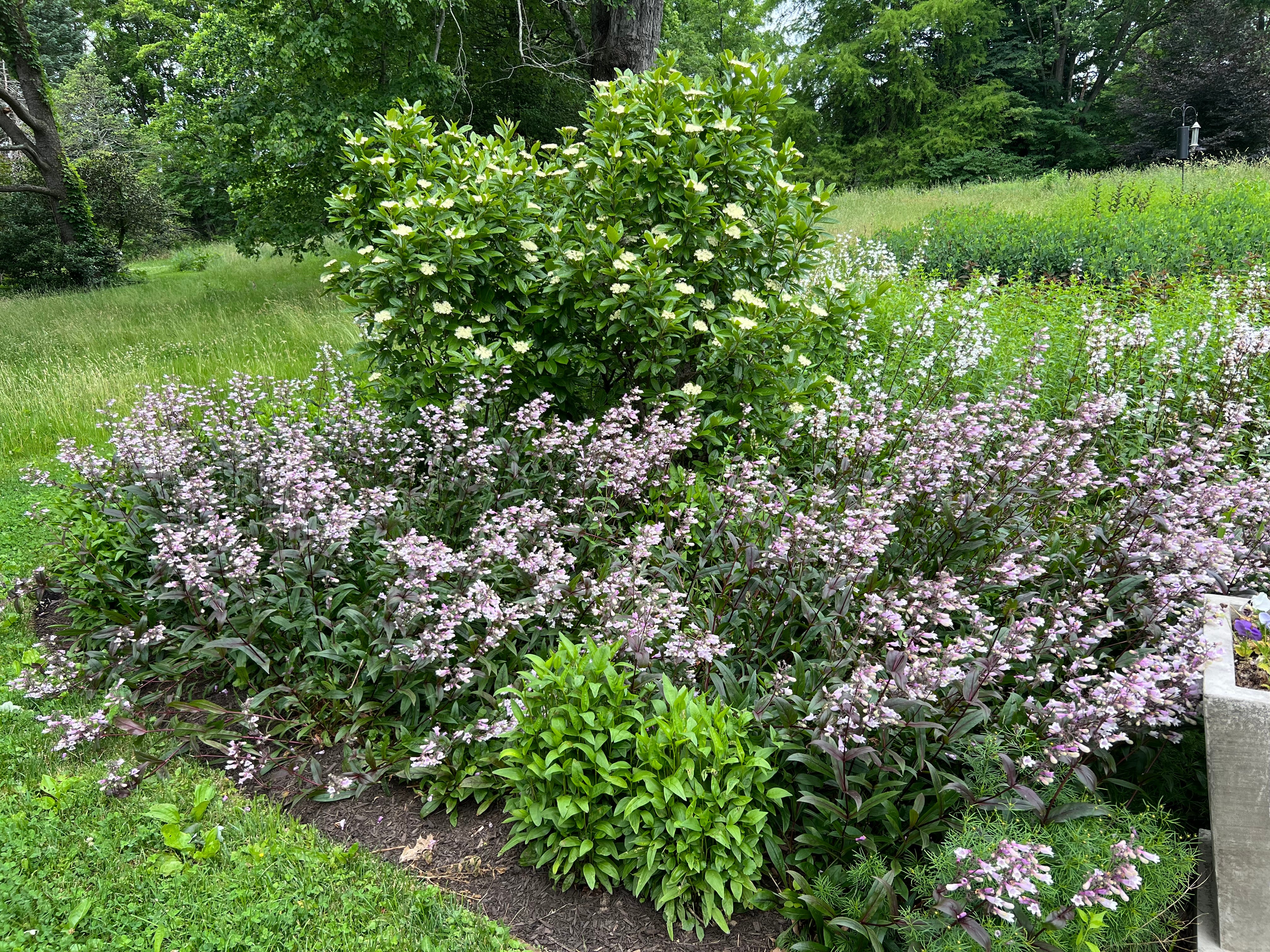
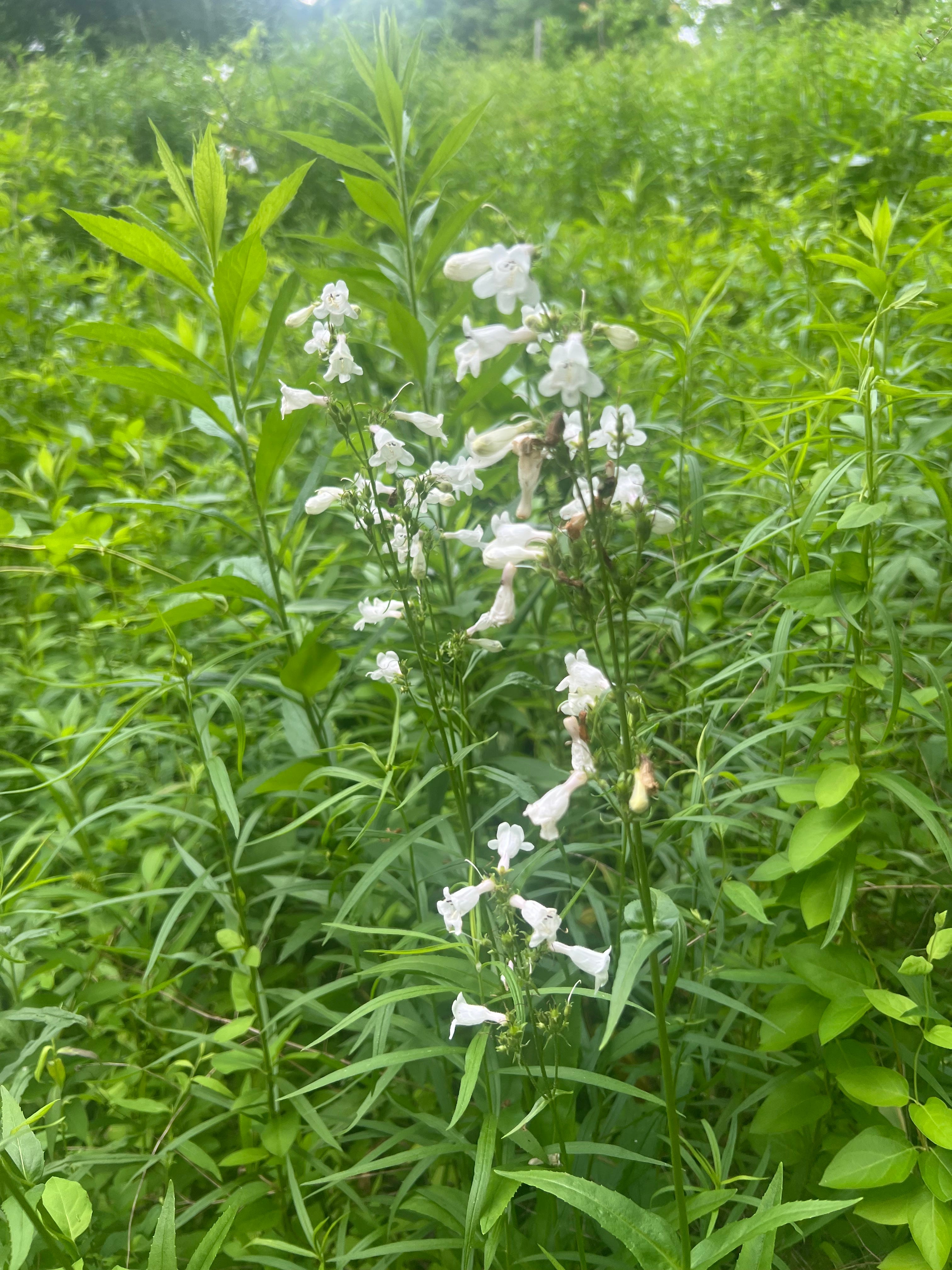
Native beardtongue (Penstemon spp.) is in peak glory in the patio garden and loaded with bumblebees:
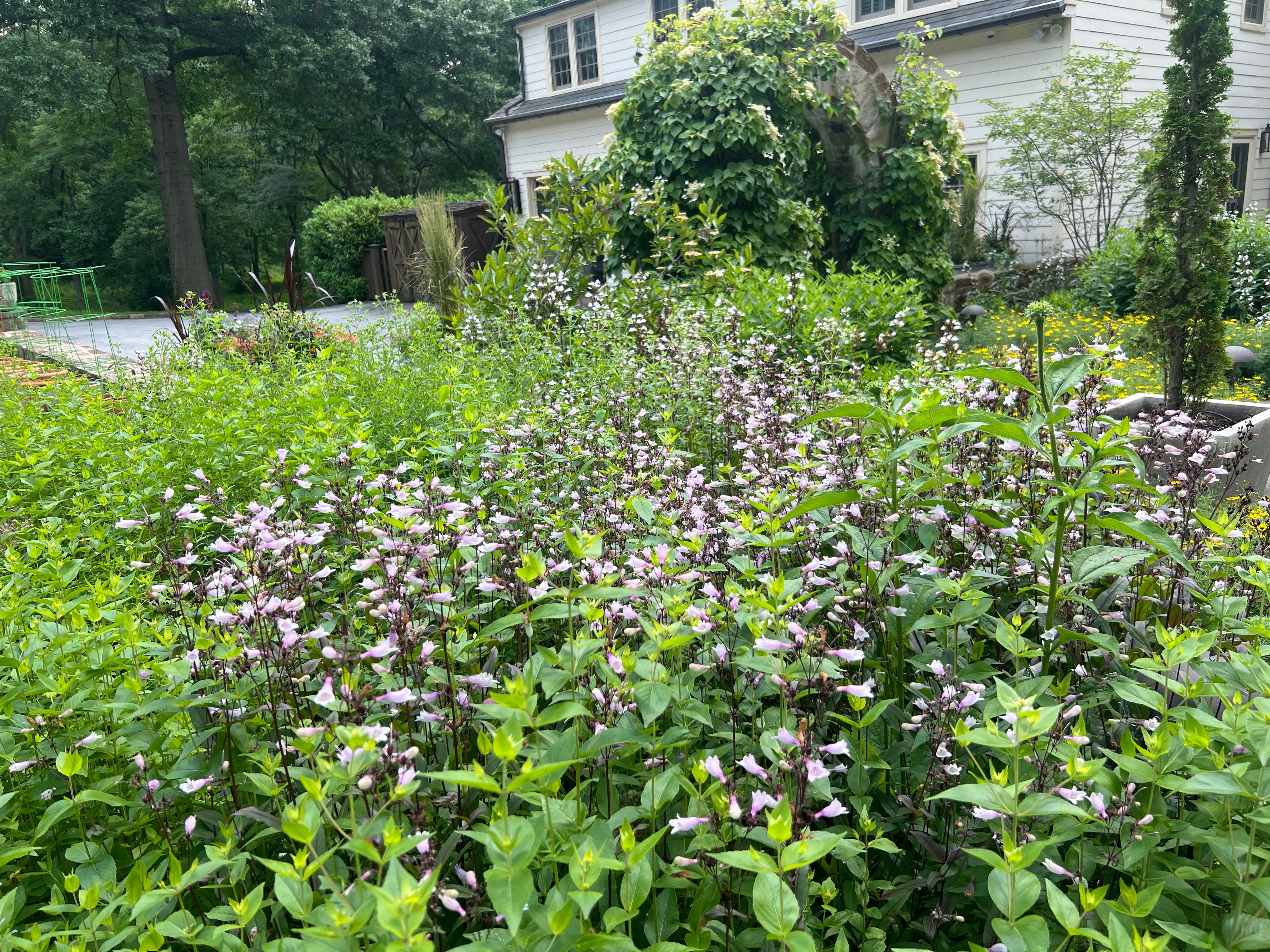
And also, more sporadically, growing in the wet meadow:
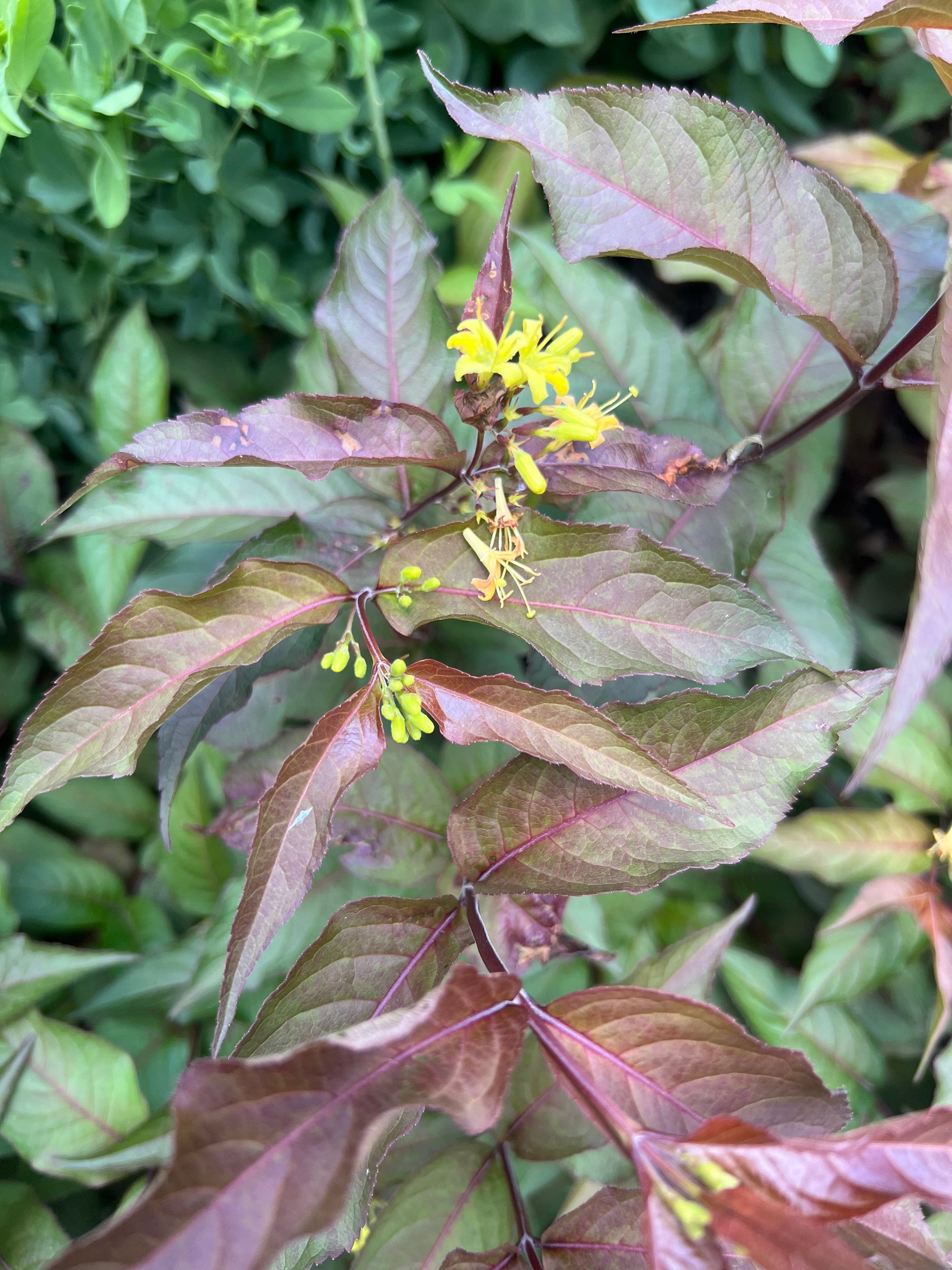
Native northern bush honeysuckle (Diervilla lonicera) has begun to bloom:
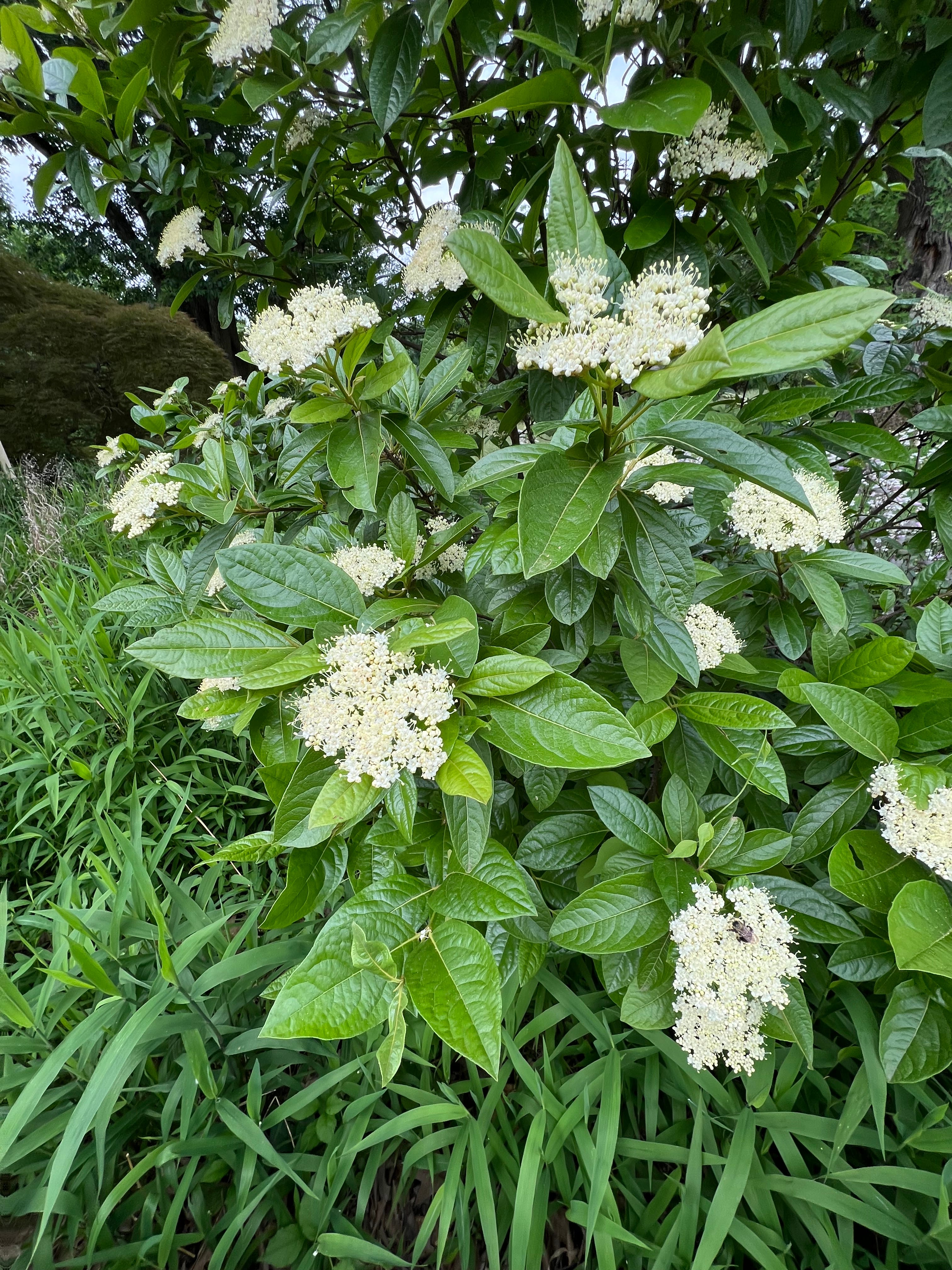
Nearby, so has native cultivar Brandywine viburnum (Viburnum nudum ‘Bulk’):
And whorled tickseed (Coreopsis verticillata) begins its show: