Context Matters
Different species interventions in the unbalanced landscape.

Readers of this publication know that Puddock Hill is surrounded by a tall deer fence that we installed about six years ago. The white-tailed deer it keeps at bay are beautiful to watch but hell on the native plants we promote for other ecological players.
It’s not the deer’s fault. We humans killed off most of their predators and reconfigured the landscape in a way that supports their fecundity. But the unfairness of it all has no bearing on other preservation efforts, and so they must be kept out.
Across the country, the deer’s ungulate cousins, peninsular bighorn sheep (Ovis canadensis nelsoni), face a different situation. Habit destruction in the hills around Palm Springs, California has not made them more prolific. It has caused their numbers to dwindle.
These sheep live in the rocky foothills of the San Jacinto mountains below 4,600 feet but above the desert floor. Listed as Endangered, their total population declined to a few hundred individuals in the late nineties before recovering to around 800 due to conservation efforts.
While it is not uncommon to see bighorn sheep on hikes into the hills, in six years we never had any luck finding them. Then, a month ago, while hiking a trail in Palm Desert with visiting friends, we turned a corner and came face to face with this stately ram:
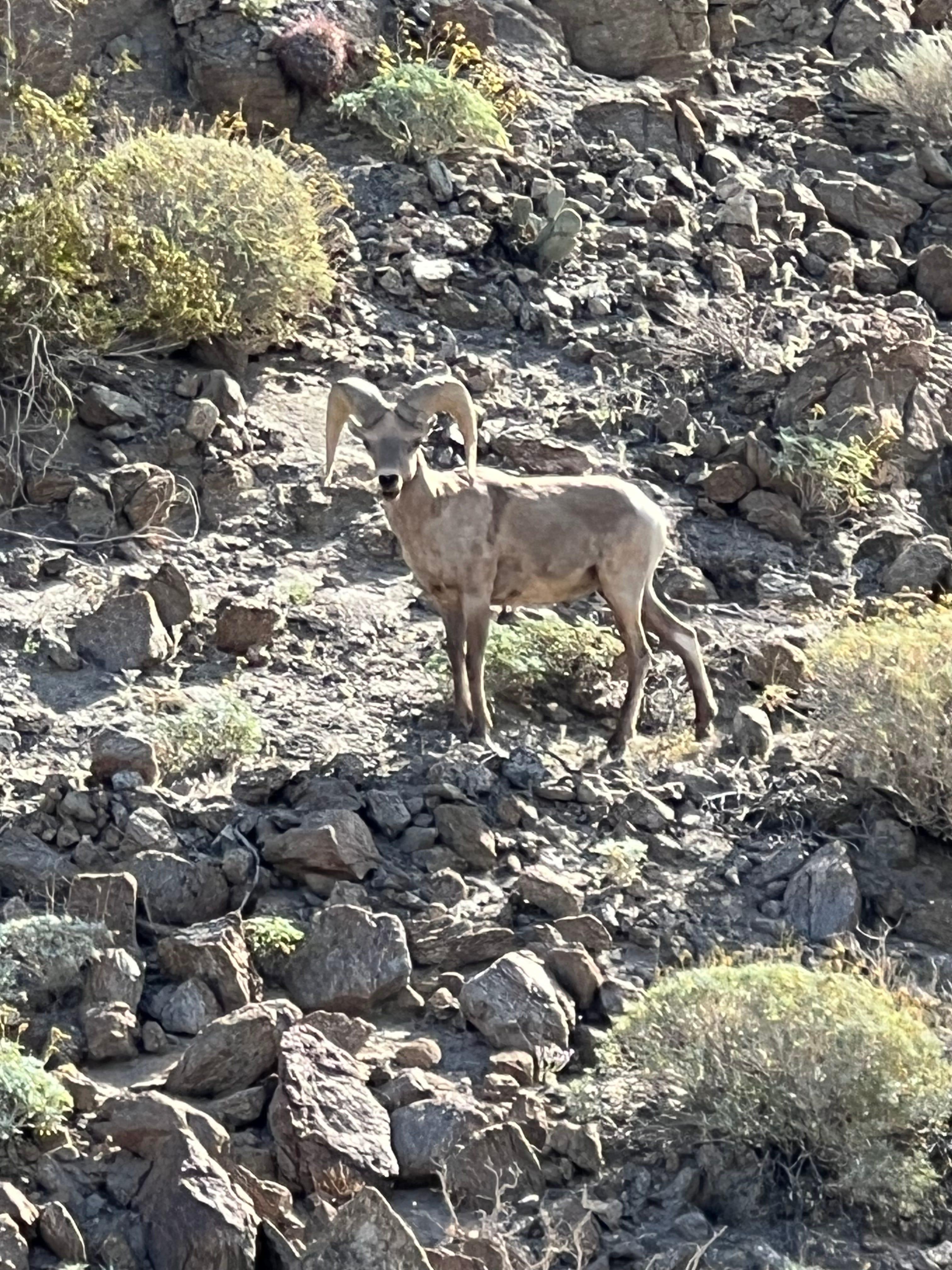
You can see how well camouflaged these animals are against the rocky terrain.
We turned another corner, and there was the rest of his herd, nearly a dozen ewes and several babies:
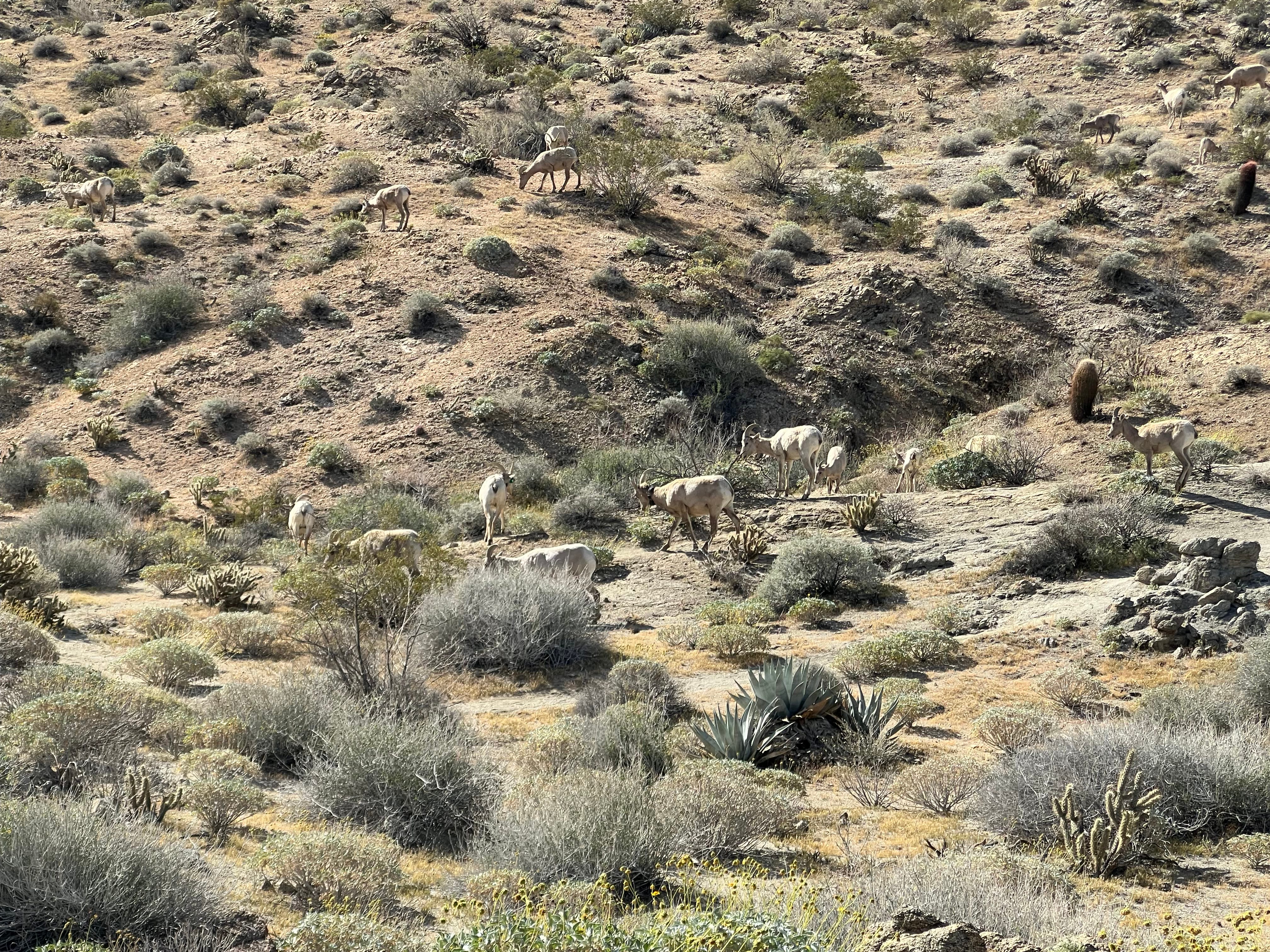
If you zoom in, you will notice that several of the ewes wore tracking collars, encouraging evidence of conservation work. In support of that work, just this year a private conservation organization transferred 650 acres of bighorn sheep habitat to the Santa Rosa band of the Cahuilla Indian tribe for protection in perpetuity.
So on one side of the continent our engineering of the landscape has caused a native deer population to explode in an unsustainable way while on the other side we have driven a native sheep population to near extinction. On one side we’re fencing them out and hunting them down while on the other side we’re tagging them and protecting them.
Context is everything.
In a seemingly unrelated case, this spring I noticed an orange butterfly flitting about a passion flower (Passiflora spp.) vine we planted in the yard a couple years ago:
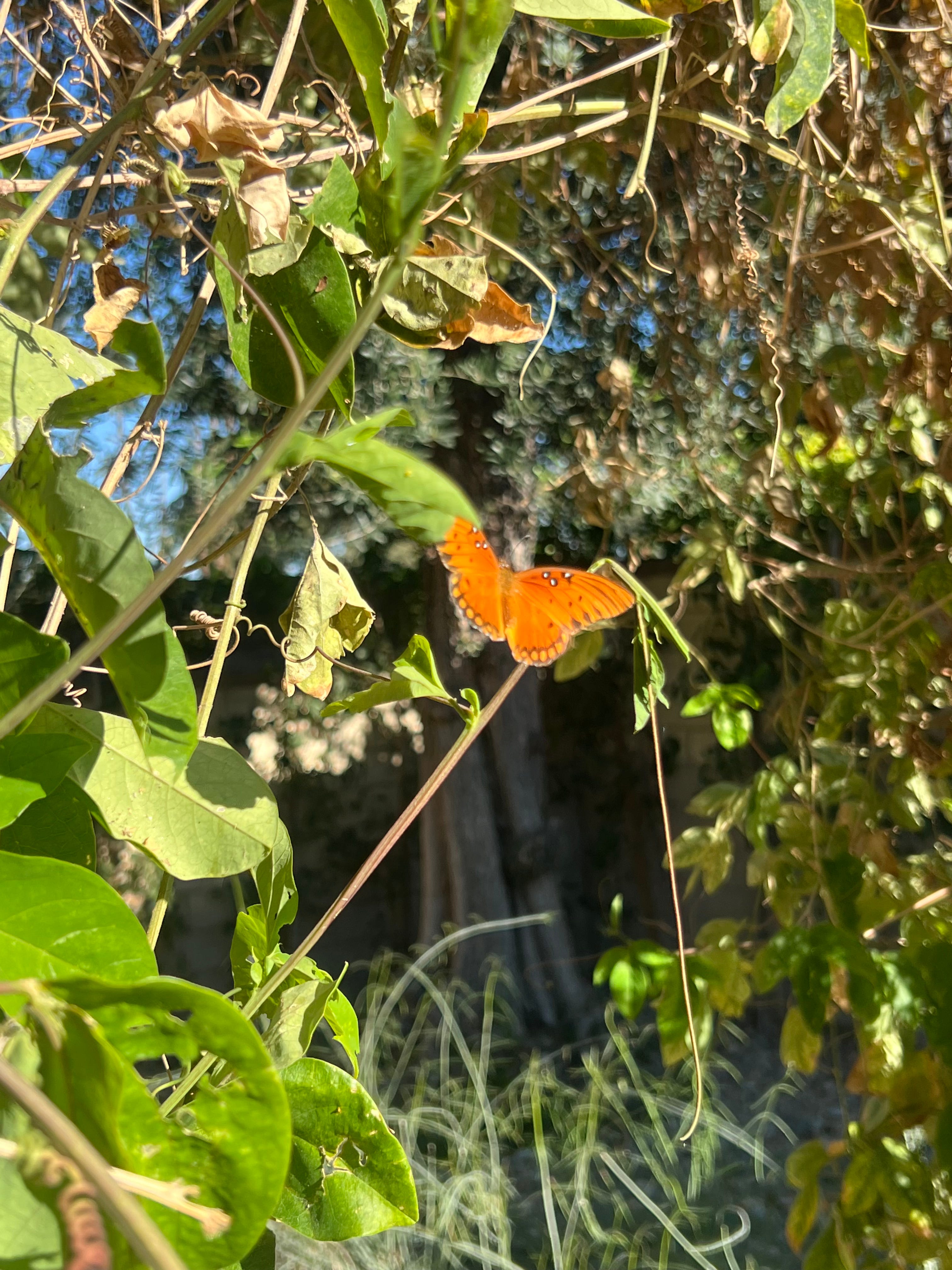
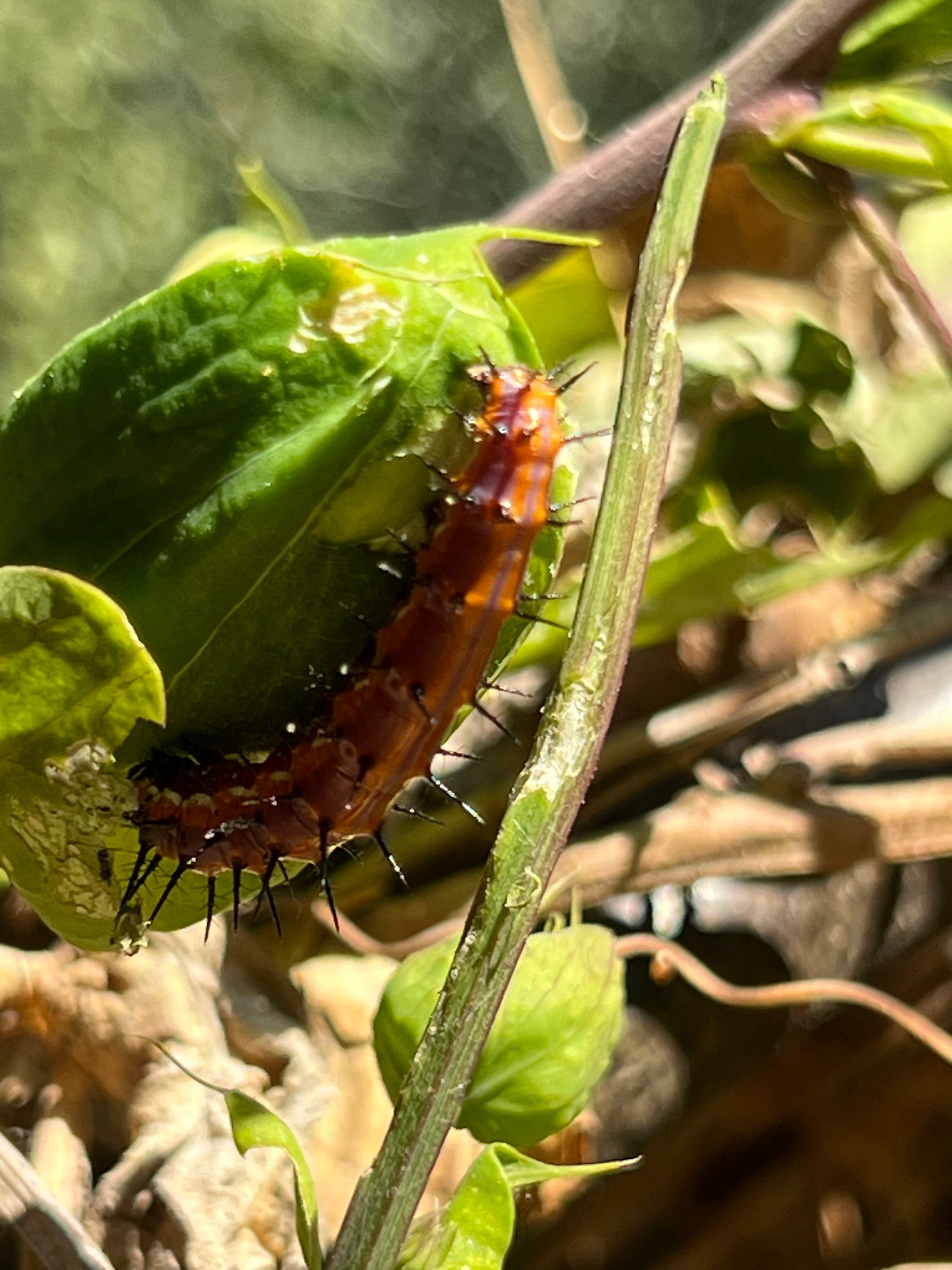
This turns out to be a gulf fritillary (Agraulis vanillae). It’s primary larval host is passion flower vines and, sure enough, I found a caterpillar on ours:
The gulf fritillary’s story turns out to be complicated. As far as I can tell, its original native range was the American Southeast down to eastern Mexico, but they are now common in the Southwest.
What happened? Flora tells the tale of fauna. Passion flower is not native to the Southwest either. It was brought here as a horticultural plant in the nineteenth century, and apparently some gulf fritillary butterflies hitched a ride and thrived.
One might wonder in this scenario whether the gulf fritillary is invasive, but I’ve found no evidence that it behaves so. Since the passion flowers don’t belong here, the gulf fritillaries are not competing with any endemic species for their nectar or foliage. They seem to be sticking to their imported niche, and so long as they continue to do so, I will cherish them.
I pointed out these butterflies and their larvae to the landscape maintenance man and asked him to leave them be. He bristled, pointing to holes in the leaves. They are eating the vine! Of course, it’s their job to eat the vine and it’s the vine’s job to feed them. I suggested he not only leave the ones in my yard alone, but consider doing so wherever he sees them.
The moral of these seemingly unrelated tales is that our settlement practices have changed the natural balance. Sometimes this requires the backyard steward to put a foot on the scale in favor of a particular species, and at other times it requires us to intervene against them. And when we perceive no harm at all, we can just set down our tools and enjoy the show.
If more humans understood these distinctions, all the denizens of our declining natural world would have a better shot.